It’s a song, isn’t it? On second thoughts, it’s the first line of a song, written in 1970 by Francis Lai with lyrics by Carl Sigman. It was evidently derived from the theme of the American film Love Story. The relationship between the song and the film is quite fascinating and if these things interest you, I shall leave you to explore that avenue of movie history for yourself. I suppose at some stage in your life, you may have had similar thoughts about wine. Perhaps you still do. My beginner stage in wine arrived a good many years ago when I was a college student in London. At the time, I knew nothing about wine and couldn’t tell the difference between a Pinot Noir grape and a rabbit’s foot. Well, I suppose I could if pressed, but you get the idea. Unlike mainland Europe, where wine had always been part of the culture, it was not the case in Britain especially during the challenging post-war years. When I started college, I felt somewhat inadequate about my complete lack of wine knowledge. But where, I wondered, do I begin?
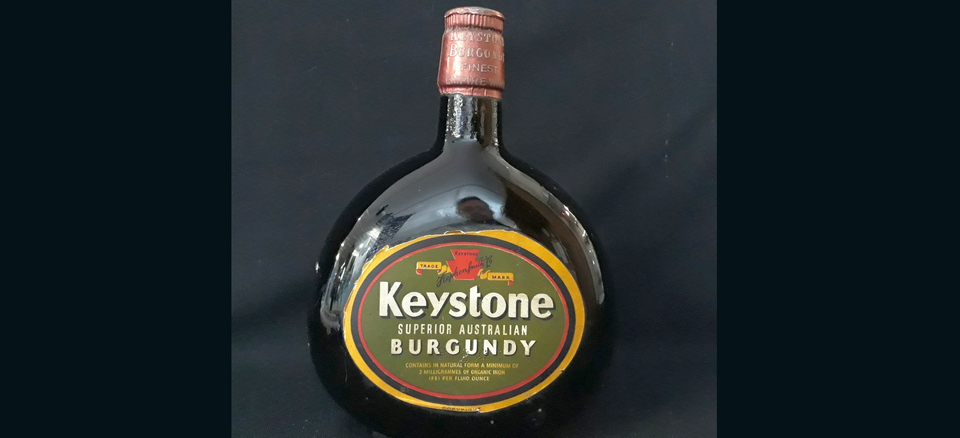
The first bottle of wine that I bought, chosen more-or-less at random at a local shop was labelled Australian Burgundy and came in a flagon-shaped bottle. It was one of the cheapest wines in the shop and I soon discovered why. The taste was unspeakably awful; rough old grog that tasted as though it was made for cleaning out the gearbox of a tractor. But I was unsure whether the fault lay with the wine or with me. You see, I didn’t know what the wine was supposed to taste like. The brand eventually disappeared, largely because the French authorities took objection to the Australians shamelessly stealing the hallowed name of Burgundy.
After the Australian Burgundy had been unceremoniously poured down the drain, I eventually tried a bottle of something called St. Ursula Goldener Oktober which I selected on the rational grounds that I liked the label. At the time, I was reading Ray Bradbury’s October Country, a collection of deliciously creepy and surreal short stories which had been published a few years earlier and that might have influenced my choice.
St. Ursula Goldener Oktober turned out to be a white, slightly sweet German blend from grapes grown nowhere in particular, but I enjoyed the satisfying gold colour and the simple, fruity, smooth style. I bought many similar wines in my student years, but I don’t suppose I’d want to drink them today. Taste moves on, or should do. In the late 1960s and 1970s, cheap mass-produced German wines dominated the British wine market and became synonymous with sweetish, low-quality plonk. As a result, the reputation of German wines suffered because people assumed that all German wines tasted like that.
Of course, nothing was further from the truth, but the German wine industry had shot itself in the foot for allowing these cheap drinks to flood the British market. It took many years for top quality German wines to regain the respect they deserved. Even so, I wouldn’t mind betting that simple gluggers such as Blue Nun and Liebfraumilch started many people on their journeys into the world of wine. Goldener Oktober launched me on my own road of discovery, a winding, unpredictable track that I continue to explore. The wine is evidently still available, but whether it tastes the same as the 1960s version is anyone’s guess.
Which wines are the best choices for a beginner? The American wine writer Nikki Goddard writes, “It’s simple. The right wines for you are the wines that taste good to you. The ones you’d be happy to drink again. It doesn’t matter what the critics say, or what your best friend says, or what your server in a restaurant says. Everyone’s palate is unique and there are no universal rules.” She is right. However, don’t assume that you will enjoy a wine because it is expensive. Surprisingly, the opposite can often be the case. You can also forget the wine “points” that many wine shops advertise so enthusiastically. High points are generally awarded to complex wines which beginners can find challenging. Specific criteria are used to award wine points, but beginner-friendliness is rarely one of them.
Wine educators agree that novices are more likely enjoy wines which are (a) light to medium-bodied, (b) fruity and aromatic, (c) low in tannins or acidity and (d) smooth with perhaps a hint of sweetness. Again, this is a generalization and it’s possible that some wine beginners might enjoy full-bodied reds. There are two main factors that influence the taste of a particular wine. One is the grape variety (or varieties) from which it is made and the second is the intention of the winemakers; whether to produce a light easy-drinker or something more complex. Alright, perhaps I’m over-simplifying things here, but we’ve got to start somewhere. You see, the red Merlot grape can be made into a simple fruity crowd-pleaser or, as in the case of the eye-wateringly expensive Château Pétrus, transformed into a powerful, symphonic wine that can be aged for decades.
When you’re faced with a daunting selection of unfamiliar names, how do you know what wine will “taste good” to you? There are several things that can help. Mass-produced commercial wines, sometimes more politely known as “marketplace wines” are a good place to start. You can spot them easily because they usually have brand-names such as Sutter Home, Gossips, Koonunga Hill, Rumours or Yellow Tail. These wines are produced on an industrial scale and often use various additives for consistency and stability, so that they taste pretty much the same from year to year. Wine connoisseurs may scoff, but these crowd-pleaser wines are invariably beginner-friendly.

I have found that many wine novices enjoy the simple Peter Vella House White Classic, which is an off-dry, undemanding white wine. It’s made in Thailand at Siam Winery by blending Californian wine with local products and it’s an easy glugger and a good starter for complete novices. Siam Winery’s locally produced Mont Clair White is a little drier, blended from South African grapes and a basic white that beginners would not find challenging. Red wines can present more of a challenge because most of them are dry and some can be rather tannic, which novices can find unattractive. Again, commercial wines come to the rescue. Local brands include the ubiquitous red wine Mont Clair, the work-horse wine of almost every bar in town. Mar Y Sol, Carlo Rossi and Berri Estates are also distributed by Siam Winery and offer easy-drinking reds at low prices. There are plenty of Australian mass-produced easy-drinkers available which include Jacob’s Creek, Yellow Tail and Warburn Estate.
There may come a time when you feel the need to move on from commercial wines to those which are made using more traditional methods. Generally, wines from warm-climate countries tend to be fuller, richer and less acidic than those from cool countries, with the result that a Chardonnay from Chile usually has a different taste profile to one from France or Northern Italy. The front label of the wine bottle invariably displays the name of the grape variety so it’s helpful to recognise the ones you enjoy. But a word of warning. There are a few grape varieties that beginners should avoid. Sauvignon Blanc is one of the world’s renowned grapes but it can produce wines that have toe-curling acidity.
Similarly, white wines from the Loire Valley such as Muscadet or Pouilly Fumé can be distinctly acidic. Contrary to popular belief, high-quality German Riesling from the Mosel Valley can have a razor-like sharpness and acidity and best avoided by novices. I’d also advise steering clear of Italian Pinot Grigio because the cheaper ones are often tart and unyielding. Red grapes that beginners should avoid are Malbec, Carménère and Nebbiolo because they often contain high levels of tannin. Shiraz and Cabernet Sauvignon can reach daunting levels of tannin too, so select them with care. Many wine outlets such as Wine Connection or the local VinestoVino have online catalogues which enable you to browse the wines at leisure and find something that appeals. And don’t forget to check the unbiased wine reviews online.
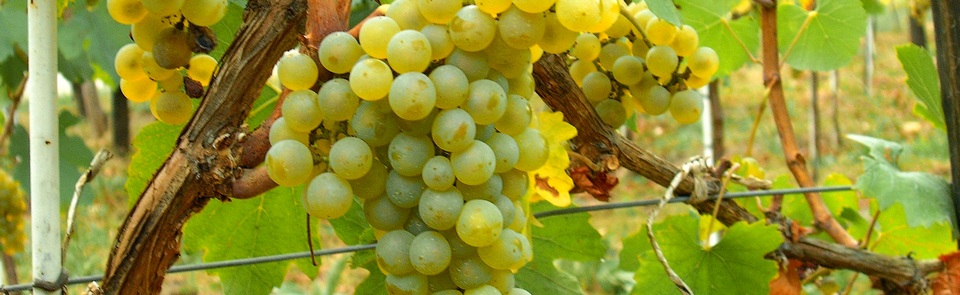
What are safe bets for novices? Well, Chardonnay (SHAH-dunn-ay) is a good start. Although it’s the classic white grape of Burgundy, it’s grown all over the world. You’ll find many examples of inexpensive commercial medium-bodied Chilean or Australian Chardonnay in the supermarkets. If you prefer something on the sweet side, look out for the various brands of Moscato (mos-KAH-toh) which comes mostly from Italy, Southern France or Australia. Beginner-friendly reds include Pinot Noir (PEE-noh NWAH) which is comparatively light in body, not too bold and soft on tannins. The wines are generally dry and earthy with hints of cherry and raspberry and easier to drink than many red varieties.
Pinot Noir also pairs well with a wide variety of foods and flavors. Merlot (mehr-LOH) can be a medium to full bodied red wine which originated in France but is now grown in wine countries all over the world. This wine is excellent for novices because of its smooth and subtle flavour palate, which highlights aromas of cherry, plum, vanilla and chocolate. Lambrusco (lam-BROO-sko) is a slightly sparkling red wine from Italy, designed to be drunk young and produced in styles that range from dry to sweet. It is also known for being food-friendly. The easy-to-pronounce Gamay is the traditional red grape of the Beaujolais region and it usually produces a light-to-medium-bodied fruity wine.

Rosé (roh-ZAY) wines offer a wide range of delightful prospects for the wine beginner because they’re mostly light-bodied and fruity. Many of them come from the South of France and they range from ultra dry to slightly sweet. For years, rosé was dismissed by connoisseurs as a simple, undistinguished country wine. But over the last few decades, winemakers have been producing rosé wines of increasing quality. In France today, more than one in five bottles of wine sold is rosé. It has become trendy among the younger set as a light-hearted, undemanding drink. Rosés are always light and fragrant (or should be), with delicate floral aromas and hints of oranges, grapefruit or lychee. For something to go with a light snack, they are perfect, especially when they’re served ice-cold. A classic wine is the French Rosé D’Anjou, an easy-drinking fruity style of wine.
If you are serious about learning about wine, it’s useful to keep a list the wines you try, and rank them according to personal enjoyment. I used to do this with a pencil and paper, but I suppose these days, making notes on your mobile phone would be more socially acceptable. A simple rating system of A to D is all you need. Rate the wine as “A” if you enjoy it tremendously and would drink it again. “B” might be a pleasant wine that you quite enjoy; “C” could a neutral rating in that you are not sure whether you like it or not. And yes, this happens. You could rate the wine as “D” if you heartily dislike it. If you can add a word or two about the taste, it will reinforce the memory in your mind. It’s important to remember that this exercise is completely subjective and does not reflect the quality of the wine. It’s just a quick way of remembering your personal taste.
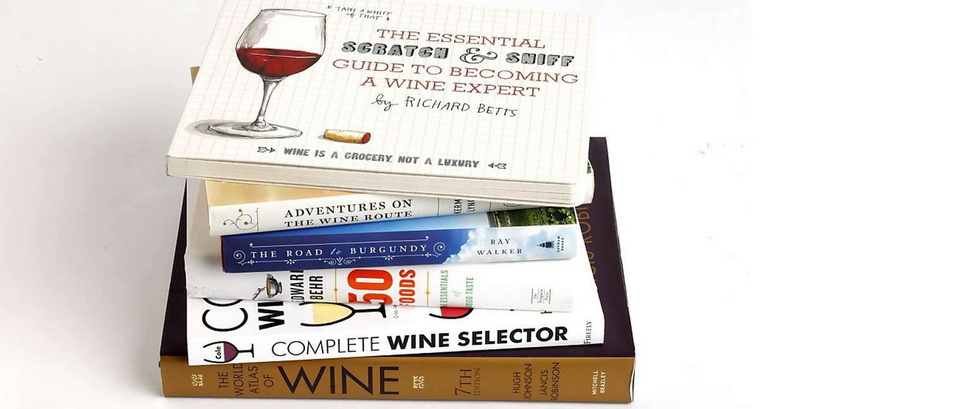
To improve your background knowledge of wine, there are countless wine articles online, catering for everyone from novices to experts. There must be hundreds of books on wine too. When I started my own wine journey, I bought dozens of books, some of which I still have. And perhaps with the festive season on the horizon, you might feel like treating yourself to a book about wine. There are plenty to choose from, and some of the best books are described in this article.
Wine World: Wine in Words <https://www.pattayamail.com/travel/wine-world-wine-in-words-421574>
As the oft-quoted Chinese philosopher Lao Tzu is supposed to have said, “A journey of a thousand miles begins with a single step,” so if you’ve not already done so, perhaps it’s time to take your first steps on your personal wine road of discovery. It might prove to be a fulfilling New Year’s resolution.