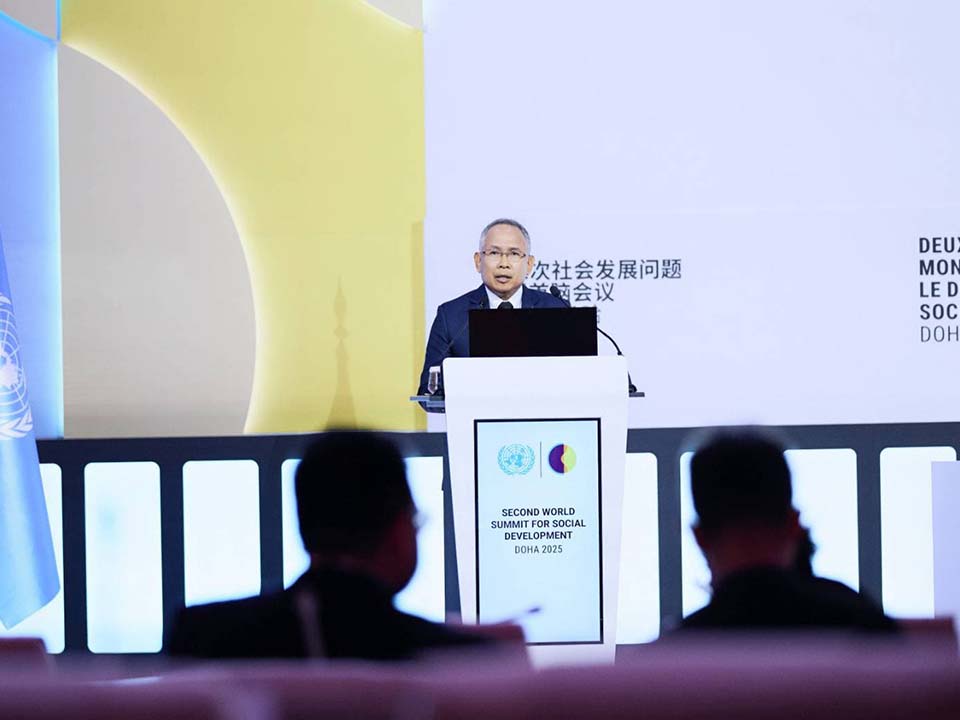
BANGKOK, Thailand – Thailand reaffirmed its approach to sustainable social development during the Second World Summit for Social Development, held on November 6 in Doha, Qatar. Permanent Secretary for Social Development and Human Security Kantapong Rangsesawang led the Thai delegation and delivered a national statement on behalf of the government. The event, attended by international representatives, assessed global progress since the Copenhagen Declaration and exchanged approaches to building more equitable societies.
Joined by officials from the Ministry of Social Development and Human Security, the Ministry of Foreign Affairs, and the Ministry of Interior, Kantaphong outlined Thailand’s people-centered development model—a policy that places families and communities at the core of national planning. Thai laws and policies increasingly promote the inclusion of individuals with disabilities, gender equality, and broader access to social protection, under the framework of the country’s 20-Year National Strategy.
The Thai government is prioritizing three key areas: poverty reduction, decent employment, and social equality. Poverty reduction efforts are guided by the Sufficiency Economy Philosophy, emphasizing moderation and resilience. Tools such as the MSO LogBook and TPMAP are used to identify at-risk households and deliver targeted support to ease financial burdens and improve income stability.
Thailand is also expanding employment opportunities by supporting rural livelihoods, SMEs, and digital upskilling for youth, senior citizens, and individuals with disabilities. Measures to protect individuals from fraud and online exploitation are part of this broader effort to ensure safe and sustainable livelihoods.
To strengthen social inclusion, Thailand applies a life-course approach, ensuring support from childhood through old age. Expanded universal healthcare, along with community-based mechanisms such as Family Centers and Youth Councils, has also improved access to services and local well-being. (NNT)