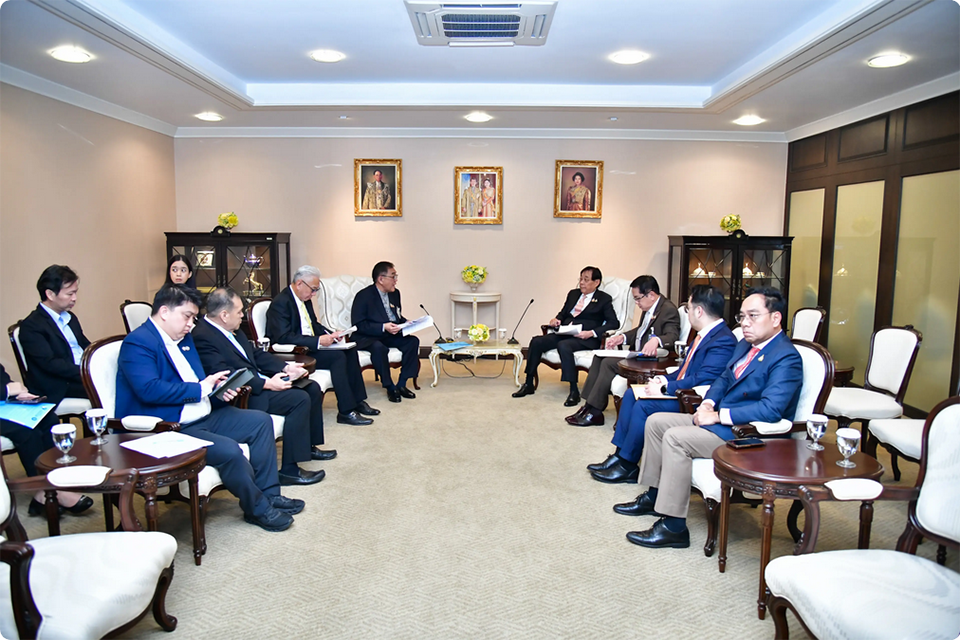
BANGKOK, Thailand – Government Spokesperson Jirayu Houngsub announced that Deputy Prime Minister and Finance Minister Pichai Chunhavajira met with Thai Chamber of Commerce Chairman Pot Aramwattananon and his delegation, who submitted proposals seeking relief measures for businesses impacted by unrest in seven Thai-Cambodian border provinces.
Deputy Prime Minister Pichai stressed that resolving labor issues is a priority. The government will convene a small workshop with the Ministry of Labor and other relevant agencies to establish clear guidelines. Plans include ensuring legal employment for migrant workers, accelerating registration of unregistered workers, and expanding quotas to allow more foreign workers to meet labor demand across sectors.
The Chamber proposed several measures, including lowering Social Security contributions, facilitating recruitment from neighboring countries such as Laos and Myanmar, as well as from Bangladesh, the Philippines, and Indonesia. They also recommended creating provincial labor coordination centers to streamline workforce management and ensure fair and transparent practices.
To stimulate tourism and the local economy, the Chamber urged government support for seminars and study visits in the border provinces. Tax relief proposals included reducing local taxes, such as land and signage fees, and introducing special tax measures for affected businesses.
Deputy Prime Minister Pichai said tourism-related measures will be coordinated with the Ministry of Tourism and Sports to design campaigns and events that can revitalize local economies. On taxation, he noted that each proposal will be reviewed individually to balance state revenues with the need to provide relief.
He assured that all proposals would be carefully considered with the relevant agencies to ensure clarity, consistency, and public confidence, reaffirming the government’s commitment to addressing challenges in the border provinces. (NNT)