BANGKOK, Thailand – Thailand’s House Foreign Affairs Committee on Wednesday reiterated that the Kingdom will not accept the jurisdiction of the International Court of Justice (ICJ) in resolving the escalating Thai-Cambodian border dispute, instead reaffirming its commitment to peaceful bilateral negotiations.
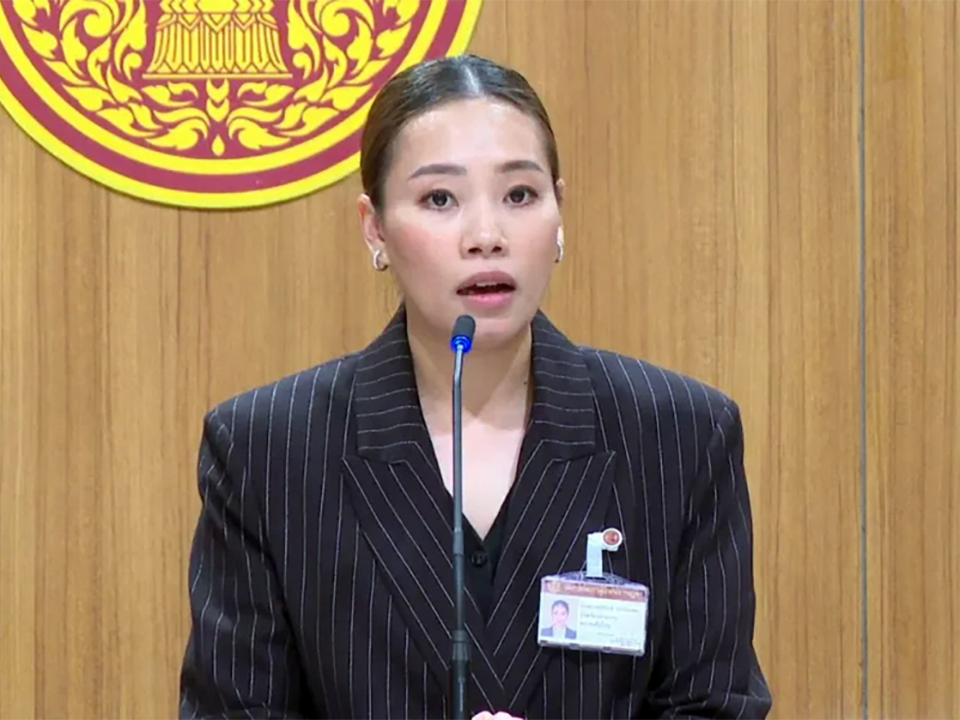
Pheu Thai MP Srasanan Annopphorn, who chairs the committee, held a press conference after the meeting to address the increasingly tense situation along the border. Relevant ministries, including the Ministry of Foreign Affairs, Ministry of Defense, and the National Security Council (NSC), were called to provide updates on the latest developments and strategic insight.
Srasanan said both sides had reinforced military presence along the frontier, particularly in disputed areas. She stressed that Thailand remains committed to resolving the issue through established bilateral frameworks such as the Joint Boundary Commission (JBC), Regional Border Committee (RBC), and General Border Committee (GBC), all of which were designed to manage such conflicts through peaceful dialogue.
“Thailand is strictly abiding by existing agreements. Security forces have been professional and restrained, always prioritizing sovereignty, national security, and the wellbeing of people on both sides of the border,” she said.
Srasanan criticized Cambodia’s behavior over recent months, accusing Phnom Penh of provocation through symbolic acts such as bringing visitors to disputed zones, playing the Cambodian national anthem at ancient temple sites, and deploying forces across agreed lines. She said these actions violated bilateral protocols.
“Ultimately, peace will only be restored at the negotiating table. Thailand and Cambodia will always be neighbors — in this life or the next. There is no alternative to peaceful coexistence,” she stated.
The committee noted that Cambodia has been uncooperative, refusing to participate in recent RBC talks and showing no indication of future willingness to engage. Nonetheless, Srasanan emphasized that the Thai military is prepared for all contingencies, though military action would be a last resort. “We are ready — in terms of tactics and weaponry — but we don’t wish to go down that road.”
The committee also warned of ongoing psychological warfare, including provocative political rhetoric from Cambodian leaders. Notably, the Cambodian Foreign Ministry and military have remained quiet, while politicians have taken a more aggressive stance — a sign, Srasanan said, of political interference aimed at destabilizing Thailand.
“These provocations are clearly intended for domestic political gain in Cambodia, especially ahead of their 2027 general election. It’s not about peace or regional harmony — it’s about building a legacy, no matter the cost,” she said.
Srasanan accused Cambodian leaders of destroying years of goodwill built between the two nations, and said the consequences — whether direct or indirect — would ultimately fall back on Cambodia.
Addressing Cambodian claims that Thailand closed its border crossings, Srasanan clarified that Thailand had merely enforced screening and controlled entry, and that it was Cambodia who chose to fully shut the gates. She reaffirmed Thailand’s intent to pursue talks via the JBC and categorically rejected any move to the ICJ, citing the court’s requirement of mutual consent — which Thailand will not grant.
“The Ministry of Foreign Affairs maintains that taking the matter to the ICJ is not standard protocol. Many cases referred to the ICJ have simply been bounced back for bilateral resolution. That is why the JBC remains the best path forward, and we are confident in the evidence supporting Thailand’s position,” she said.
The committee pledged continued support for the government and the Foreign Ministry, and commended Thai security forces for their restraint and professionalism in the face of repeated provocation.
Srasanan concluded with a strong condemnation of what she called Cambodia’s “below-the-belt political punches,” saying: “This is a historic turning point. Their actions have destabilized our bilateral relations and regional peace. The damage is done — and there will be consequences.”
Finally, she urged the media to help inform the public by amplifying the Foreign Ministry’s daily statements and updates, while encouraging all state agencies to stay the course diplomatically and not fall into the trap of daily provocations. (TNA)