

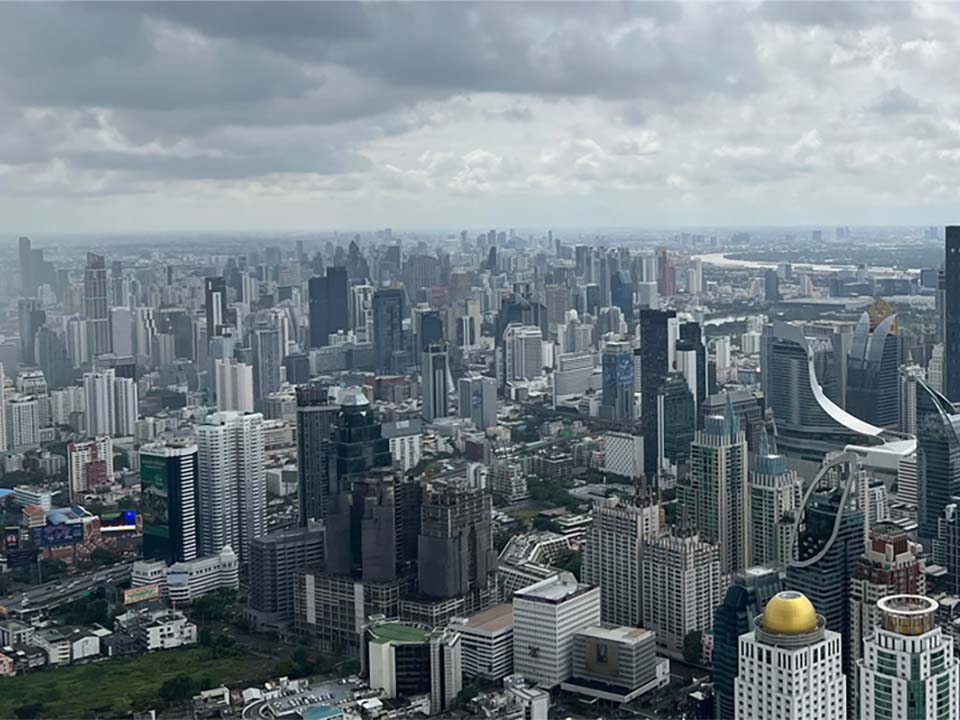
BANGKOK, Thailand – Thailand’s efforts to tighten checks on suspicious foreign money transfers are creating fresh challenges for the property sector, with developers reporting delayed condominium transfers, weaker foreign demand and mounting pressure on cash flow. The Bank of Thailand (BOT) requires banks to examine supporting documents showing the source of funds for foreign currency transactions of US$200,000 or more per transaction, equivalent to approximately 6.8 million baht. The requirements are affecting foreign buyers purchasing property in Thailand, even those with established banking relationships.
Sunthorn Sathaporn, president of the Housing Business Association, disclosed that foreign buyers transferring money to purchase condominiums priced between 8 million and 10 million baht now face additional documentation and verification procedures. In some cases, transfers have been delayed by one to two weeks, leaving hundreds of millions of baht tied up in the process. Developers receive payments later than expected, affecting cash flow and increasing financing costs.
While supporting measures to prevent money laundering and funds originating from illegal businesses, Sunthorn said banks should distinguish between suspicious transactions and legitimate investments with verifiable sources of funds. The association is calling on banks to establish clear documentation requirements and verification timelines, particularly for legitimate customers. It also wants a risk-based approach that takes into account the nature of property transactions rather than applying procedures that create unnecessary obstacles for genuine buyers.

Phuket investors adopt wait-and-see approach
The impact is also being felt in Phuket, where foreign buyers are facing additional difficulties transferring money into Thailand. Methapong Upatising, president of the Phuket Real Estate Association, said Russian buyers already face difficulties making international transfers through the SWIFT banking network because of economic sanctions. Some must route funds through Hong Kong before transferring them to Thailand, adding further complexity. Chinese buyers are also encountering obstacles because of restrictions imposed by their government on moving capital overseas.
Methapong said the combined requirements of the central bank and Land Department have made property transactions more complicated. Buyers must provide evidence of the source of funds, while certain transactions require supporting certification before ownership transfers can proceed.
Some prospective buyers have become concerned about possible account freezes, while others have withdrawn from purchasing and opted to rent instead.
Large foreign investors considering hotel acquisitions, event venues and sports complexes have also adopted a wait-and-see approach, delaying purchases and new investments. The association estimates that investment worth billions of baht could be put on hold.
Methapong said projects already under construction or with firm investment commitments were continuing, as Phuket remained an attractive strategic destination. However, he urged the government to establish clearer regulations and facilitate legitimate foreign investment.
He also proposed extending leasehold rights from 30 years to 50 years to make Thailand more competitive with neighbouring countries.
Chonburi condominium transfers delayed by up to six months
Chonburi’s property market is also experiencing difficulties, particularly in the condominium sector, which relies heavily on foreign buyers. Meechai Choonharakchot, president of the Chonburi Real Estate Association, said international money transfers for foreign property purchases were taking considerably longer, with some transactions delayed by as much as six months.
He attributed the delays to restrictions imposed by both countries of origin and Thailand, including limits on the amount of money that can be transferred overseas within a given week or month.
Chinese buyers remain particularly important to the Chonburi condominium market and account for the largest share of foreign ownership transfers, despite a decline in their purchasing power.
Delayed payments are putting additional pressure on developers, forcing companies to exercise greater caution with spending. Some may reduce staff numbers, cut non-essential expenses, scale back events and bonuses, or limit salary increases. Developers are also becoming more cautious about launching new projects, preferring to sell existing inventory and preserve liquidity and cash flow.
Legitimate buyers caught in tighter checks
Industry sources said the anti-grey money measures were also affecting Thai consumers married to foreigners. In cases where a foreign spouse provides the money but the property is registered in the Thai spouse’s name, additional documentation and verification requirements can complicate or prevent the transaction.
The sources called for clearer guidelines allowing authorities and banks to assess the actual source of funds through account statements and other verifiable financial records. They warned that uncertainty surrounding the procedures could discourage foreign buyers from committing to property purchases in Thailand, particularly when acquiring high-value assets already involves substantial financial decisions.
AssetWise proposes 60-year leasehold rights
Despite the concerns, not all developers are reporting direct effects on their businesses.
Kromchet Vipanpong, chief executive officer of AssetWise Plc (ASW), said foreign buyers accounted for a share of the company’s condominium sales within the legally permitted 49% foreign ownership quota. He said the measures had not directly affected the company but acknowledged potential consequences for the wider property market in Bangkok, Phuket and Pattaya. He said clearer regulations could help position Thailand as an attractive second-home destination for foreign investors amid continuing geopolitical uncertainty.
Kromchet called on the government to strengthen long-term safeguards against illegal money while providing transparent rules that give legitimate foreign investors confidence. He also proposed extending leasehold rights under the Rights over Leasehold Asset Act from 30 years to 60 years, arguing that the change could be implemented more easily and provide another option for attracting foreign investment.
The property industry’s message is that preventing illicit financial flows remains important, but predictable procedures and clear rules are equally necessary to ensure legitimate foreign investment is not caught in the process. (Story & Photo: Prachachat Business)