

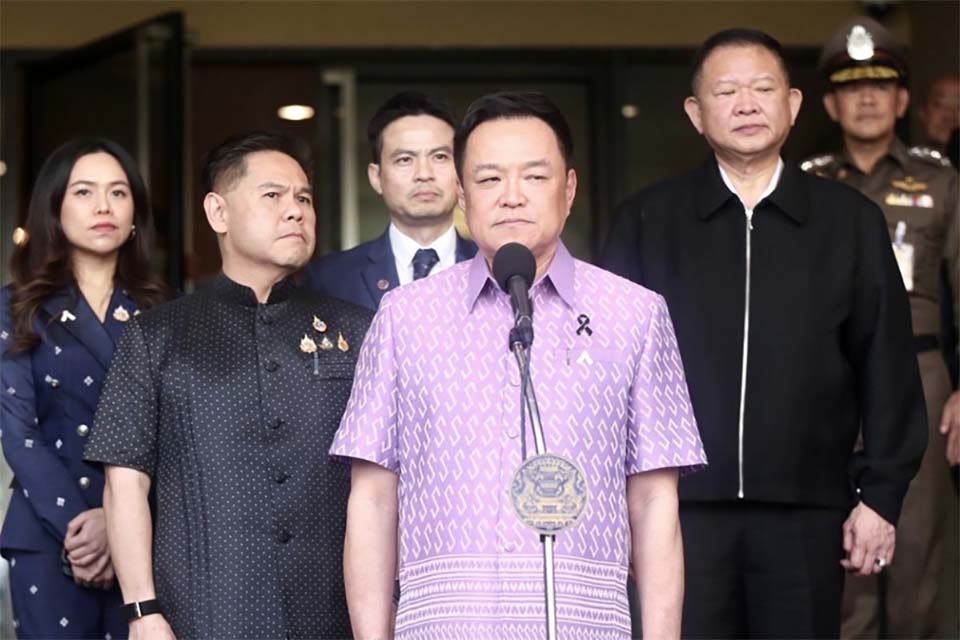
BANGKOK, Thailand – Prime Minister Anutin Charnvirakul has defended the Cabinet’s decision to postpone approval of an early retirement scheme for civil servants, saying the proposed program requires a closer examination of its financial costs and whether it would genuinely reduce the government’s long-term burden. Speaking after Tuesday’s Cabinet meeting at Government House, Anutin said the proposal had not been rejected but had been sent back to the relevant agencies for further review. He called for the details to be revised and resubmitted as soon as possible.

The program is expected to require an initial budget of more than 20 billion baht, including lump-sum compensation of up to 18 times monthly salary. Anutin said the government must carefully weigh the costs against the benefits before committing such a substantial amount of public money. One major concern is whether positions vacated by retiring officials would be permanently abolished. He questioned the value of paying employees to leave if government departments later request permission to recruit replacements, leaving the state with the same staffing costs and no improvement in efficiency.
Anutin said the government must avoid a situation in which it spends billions of baht, loses experienced and capable personnel, but sees no corresponding improvement in public services.
He also highlighted the continuing pension obligations attached to early retirement. According to the Prime Minister, the state could remain responsible for pension payments equivalent to at least 70% of an employee’s current salary until the individual’s death.
Unlike the private sector, where early retirement can bring employment obligations to an end, the government would continue carrying these long-term financial commitments. Anutin said this must be factored into the assessment alongside the initial compensation payments. He stressed that the objective should be to reduce the size of the civil service while ensuring government departments benefit from greater efficiency and lower long-term costs. The Prime Minister emphasized that the Cabinet had not said no to the proposal, but wanted stronger assurances that the scheme would deliver genuine savings and would not create additional financial burdens for future governments.