

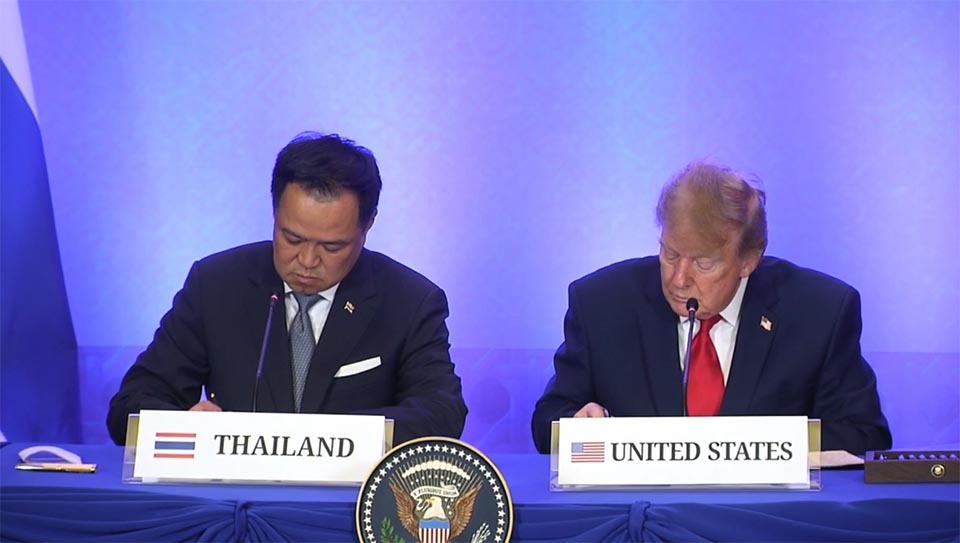
MANILA, Philippines – Prime Minister Anutin Charnvirakul defended Thailand’s recently signed trade framework with the United States, stating that the agreement serves national interests and expands market access for Thai agricultural goods. Speaking after the signing of the Joint Statement on an Agreement Between the United States of America and the Kingdom of Thailand on Reciprocal Trade (ART) in Manila alongside U.S. President Donald Trump, Anutin rejected criticism that the pact disadvantaged Thailand. “If Thailand stood to lose from this agreement, we would not have signed it,” Anutin said, emphasizing that negotiations had been underway for some time and that the government prioritizes maximizing national benefits.
The Prime Minister noted that the agreement broadens consumer choices for certain American goods while enabling higher agricultural exports to the United States, a market of nearly 400 million consumers. Thailand maintains a significant trade surplus with the U.S., its largest trading partner, despite efforts to balance trade through imports of U.S. goods such as aircraft. Deputy Prime Minister and Commerce Minister Suphajee Suthumpun added that the Ministry of Commerce is assessing the industrial and commercial impacts of the agreement.
Preliminary reviews indicate that U.S. export restrictions targeting advanced processing chips for large-scale data centers are expected to have a limited direct impact on Thailand. Imports of U.S. chips account for approximately 0.7% of Thailand’s total chip imports, though officials noted that broader implications involving cloud computing rentals, data processing, and third-country services remain under review.
Meanwhile, Poj Aramwattananont, Chairman of the Thai Chamber of Commerce and the Board of Trade of Thailand, welcomed the agreement as a positive signal for the Thai economy. He stressed that maintaining competitive access to the U.S. market is vital for Thai businesses, supply chains, and employment, helping prevent potential disruptions to production and long-term investment. (TNA)