

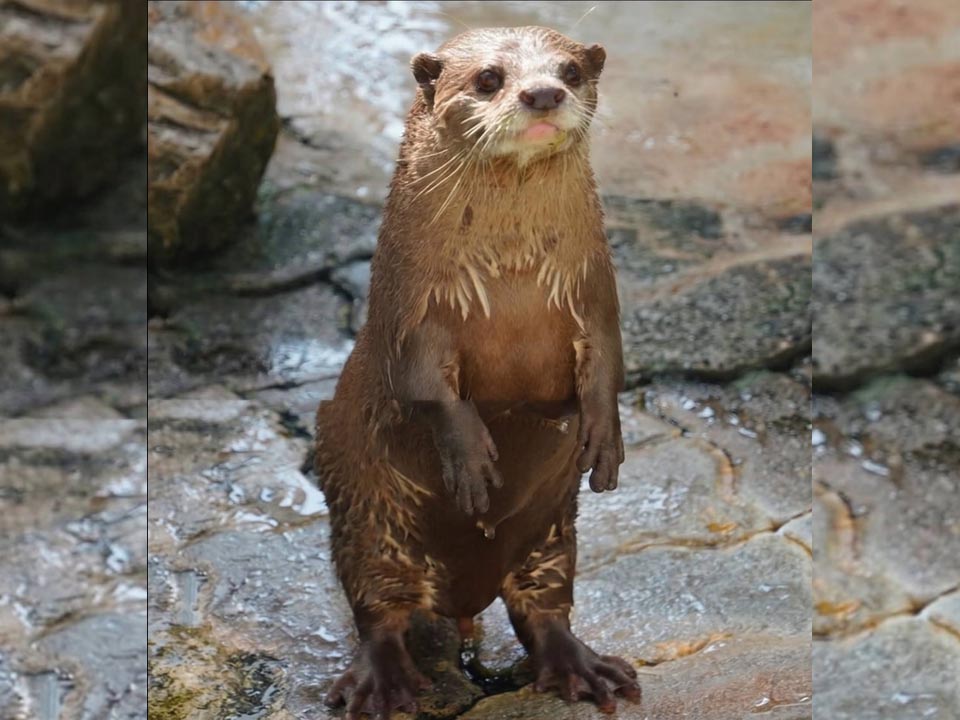
NAKHON PATHOM, Thailand – A tame otter named Boon Ting has died less than a month after being transferred from a private zoo in Nakhon Pathom to a wildlife rescue center in Ratchaburi, prompting public debate over animal welfare, its previous care and the circumstances surrounding its relocation.
Boon Ting had lived at the zoo for six years after being left there by its former owner, who reportedly could no longer afford the cost of keeping the animal. Zoo staff cared for the otter, which became a popular attraction among visitors and was described as healthy, active and accustomed to human contact.
The case attracted widespread attention after a female social media influencer visited the zoo and posted a video expressing concern about the otter’s living conditions. She described Boon Ting as isolated and living in an unsuitable enclosure, raising questions about its welfare and prompting complaints to the relevant authorities.
Officials subsequently inspected the facility and found that it did not have the required license to possess a protected wild animal. They seized Boon Ting and transferred it to Wildlife Rescue Centre No. 3 (Prathap Chang) in Ratchaburi for rehabilitation, with the intention of eventually preparing it for release into the wild.
However, the otter reportedly became withdrawn and stopped eating regularly after the move. It died less than a month after arriving at the center. The rescue center said it had initially been informed only that Boon Ting was an abandoned wild animal. It suggested that prolonged close contact with humans from an early age may have left the otter highly accustomed to people and less able to adapt to a sudden change of surroundings and caregivers.
The center cited stress and depression as possible factors in the animal’s decline. It also said that more detailed information about Boon Ting’s history and previous care could have helped staff determine a more suitable approach to its rehabilitation.
A volunteer who had helped care for the otter at the former zoo said the team had not wanted Boon Ting to be moved. The volunteer alleged that officials had pressed for its transfer, assuring them that the animal would receive care and undergo a rehabilitation process that could take one or two years before any possible release.
The volunteer also said members of the group had repeatedly sought updates and requested permission to visit. According to the account, they were eventually informed that Boon Ting had died, after receiving unclear responses about its condition and the circumstances of its death.
News of the otter’s death triggered strong reactions online, with many users questioning the circumstances of the transfer and criticizing the influencer for raising concerns without first establishing all the facts. Her TikTok account reportedly faced a wave of criticism and was subsequently closed.
The influencer later issued a statement expressing sadness and apologizing for what had happened. She acknowledged that she should have gathered more information and checked the facts with officials before publishing the video. She said her intention had been to encourage improvements in the animal’s welfare, rather than cause harm.
The case has raised wider questions about the challenges of caring for animals that have spent much of their lives in close contact with humans, as well as the importance of accurate information and careful planning when protected wildlife is transferred for rehabilitation.