


BANGKOK, Thailand – Thailand enters the November tourism high season with rising weekly international arrivals, stronger long-haul demand and expanding wellness investment. However, visitor numbers and tourism earnings remain below last year, while regional competition and travel convenience continue to influence the country’s prospects.
The latest Joint Foreign Chambers of Commerce (JFCCT) tourism and hospitality update highlights improving demand alongside the need for clearer entry information, consistent airport procedures and reliable aviation connections.
Arrivals improve as revenue proves more resilient
Thailand welcomed 501,965 international visitors during October 18–24, up 2.99% from the previous week. Year-to-date arrivals reached approximately 24.93 million, down 4.43% year on year, while international tourism revenue totalled 1.21 trillion baht, a decline of 2.68%.
Average revenue per international visitor stood at approximately 48,500 baht. The smaller decline in earnings suggests spending has held up better than overall visitor numbers.
In the latest weekly comparison, long-haul arrivals increased 12.03%. Russia recorded growth of 25.45%, India 18.09% and the United States 11.52%, while China declined 24.17%. Sustaining that recovery throughout the high season will be crucial for hotels, restaurants, tour operators and local suppliers.
Five priorities for 2027
The Tourism Authority of Thailand’s direction for 2027 centres on wellness and longevity, year-round festivals, creative cultural experiences, sustainable and regenerative tourism, and visitor confidence through Trusted Thailand.
The strategy targets tourism revenue growth of at least 5%, with stronger links between tourism businesses and local communities. Success will depend on translating these priorities into measurable improvements in visitor spending, service quality and benefits for local economies.
Convenience becomes a competitive advantage
Vietnam, Japan, Malaysia and South Korea are competing strongly for international travellers. Thailand’s appeal therefore depends on the entire journey, including the ease of booking, understanding entry requirements and moving between destinations.
The update identifies shorter visa-exempt stays for eligible visitors, the Thailand Digital Arrival Card required before each entry, and nationality-specific conditions as factors affecting travel planning. The proposed 450-baht foreign tourist arrival fee adds another consideration.

Clear communication is particularly important when explaining separate charges. The update lists an international passenger service charge of 1,120 baht, while the proposed 450-baht arrival fee remains distinct from a further 1,000-baht international departure tax whose introduction has been postponed.
Airport consistency also matters. During a recent Phuket press trip connected with Minor Hotels and Gardens of Eden, a journalist was allowed through Suvarnabhumi security with three power banks but had one confiscated in Phuket, where a two-unit limit was enforced.
Safety requirements must be applied consistently and explained before passengers travel. Similar advance guidance is needed on checked-baggage inspection procedures introduced on October 16, including recommendations to use TSA-approved locks. These allow inspection and re-locking, whereas other locks may need to be cut, with passengers bearing the risk of damage.
Wellness attracts investment across Thailand
Wellness is becoming a reason to choose Thailand rather than simply an additional hotel service.
Global Wellness Institute figures cited in the update value Thailand’s overall wellness economy at US$42.7 billion, approximately 1.4 trillion baht, including US$14 billion in wellness tourism. Average international health and wellness visitor spending is estimated at 60,650 baht per trip.
The figures also place Thailand 15th globally for wellness tourism and cite growth of 36.4%, although the reference period is unspecified.
Investment is spreading across established and emerging destinations. Gardens of Eden Resort Phuket, planned for operation by Minor Hotels, will include a wellness centre exceeding 5,000 square metres within a 33-acre development. Phuket is also scheduled to host the Global Wellness Summit on November 10–13.
Bangkok’s Sukhothai Spa adds to the capital’s urban wellness offering, while Hua Hin continues to build on the reputation of Chiva-Som and THE BARAI. The update describes THE BARAI’s evolution into a 98-room beachfront wellness resort under Hyatt’s Unbound Collection.
Chiang Mai is developing its wellness and longevity positioning, while Chiang Rai incorporates northern treatments and healing traditions into luxury hospitality.
Near Pattaya, a planned 520-million-baht wellness sanctuary covering 38 rai reflects interest in the Eastern Economic Corridor. Kamalaya supports Koh Samui’s specialist retreat market, while Hat Yai is central to Songkhla’s medical and wellness tourism development.

Regional flights offer new connections
EZY Airlines began scheduled Hua Hin–U-Tapao services on October 23, linking Hua Hin with the Pattaya and Rayong region in approximately 40 minutes. Promotional one-way fares start at 2,900 baht.
Using Cessna 208B Grand Caravan aircraft, the airline is also scheduled to launch Hua Hin–Surat Thani services on November 7. These small-scale operations will test demand for direct regional travel without passing through Bangkok.
Meanwhile, reductions and suspensions affecting Middle Eastern airline services warrant attention. Major Gulf hubs connect Thailand with Europe and other long-haul markets, and prolonged disruption could affect seat capacity, fares and forward bookings.
Sustainability moves towards practical action
JFCCT is scheduled to participate in SX Sustainability Expo 2026 at Bangkok’s Queen Sirikit National Convention Center from November 6–15, with a dedicated booth supported by committee chairs and working-team members.
The event offers an opportunity to connect sustainability policy with practical business action. For tourism, the broader challenge is to turn improving demand into lasting earnings while making travel convenient, strengthening local businesses and delivering a consistent visitor experience.
Andrew J Wood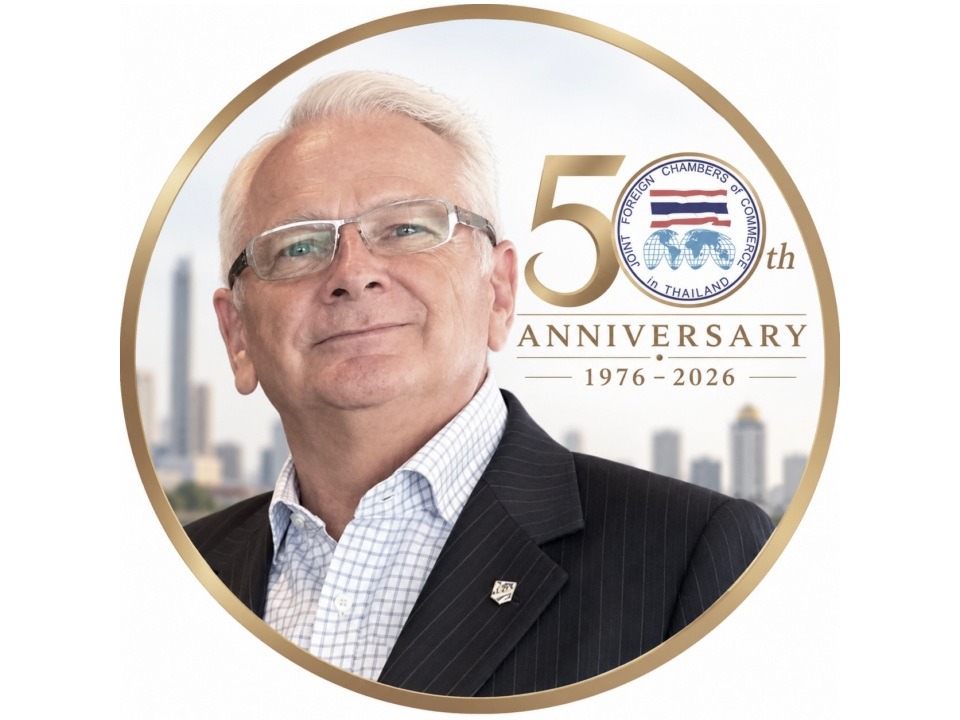
Chairman, Tourism Committee
Joint Foreign Chambers of Commerce In Thailand ▫ JFCCT
Website: www.jfcct.org