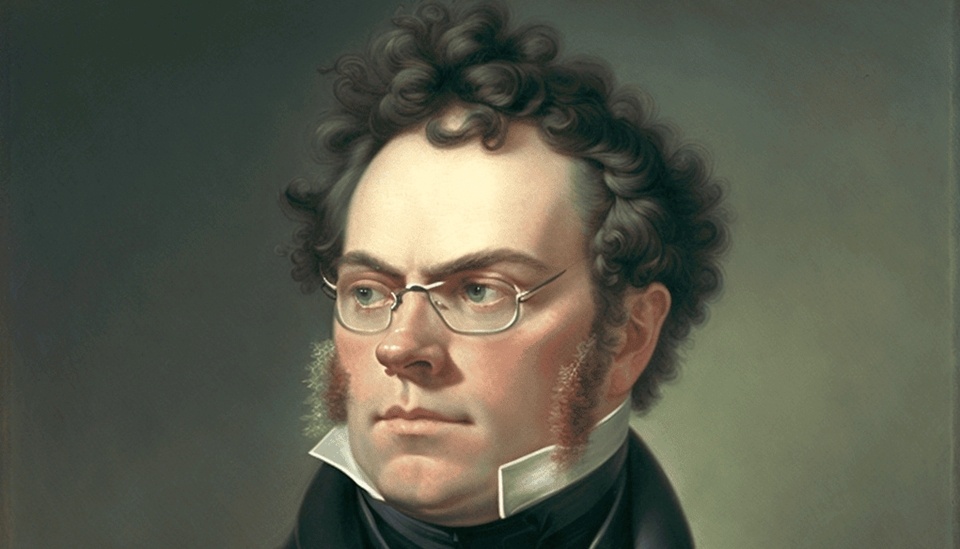
If someone were to organise a competition to find which composers created the most memorable melodies, one prize would surely go to the Austrian composer Franz Schubert. During his short life of thirty-one years, he wrote nine symphonies, hundreds of songs, along with a wealth of chamber works and piano music. This vast output contains some of the most beautiful and expressive melodies that resonate deeply with listeners. Schubert – like a handful of other composers – had the uncanny ability to craft expressive, flowing melodies that explored the whole range of human emotion, from feelings of utter desolation to profound joy; from rage and dejection to sweetness and heart-breaking melancholy. I couldn’t help reflecting on this while listening to Schubert’s Impromptu Op. 90, No. 3 in G-flat major.
It was the opening work of a piano recital at Ben’s Theatre Jomtien, given by the young Russian pianist German Kitkin, who delighted a large, appreciative audience with a selection of favourite nineteenth-century piano works. Schubert’s third Impromptu (from a set of four) is a beautiful, song-like piece with a dreamy, slow-moving melody over a flowing arpeggiated accompaniment. German Kitkin gave a compelling performance, highlighting the melody and the expressive harmonic changes.
German continued with the third and final movement from Beethoven’s well-known Piano Sonata No. 17 in D minor, Op. 31, often nicknamed “The Tempest”, possibly on account of its storm-like first movement. I was impressed with German’s clear articulation, phrasing and dynamic contrast. With almost 400 bars, it’s a long movement, but full of rhythmic and melodic interest. German’s excellent, precise performance made it one of the concert’s highlights.
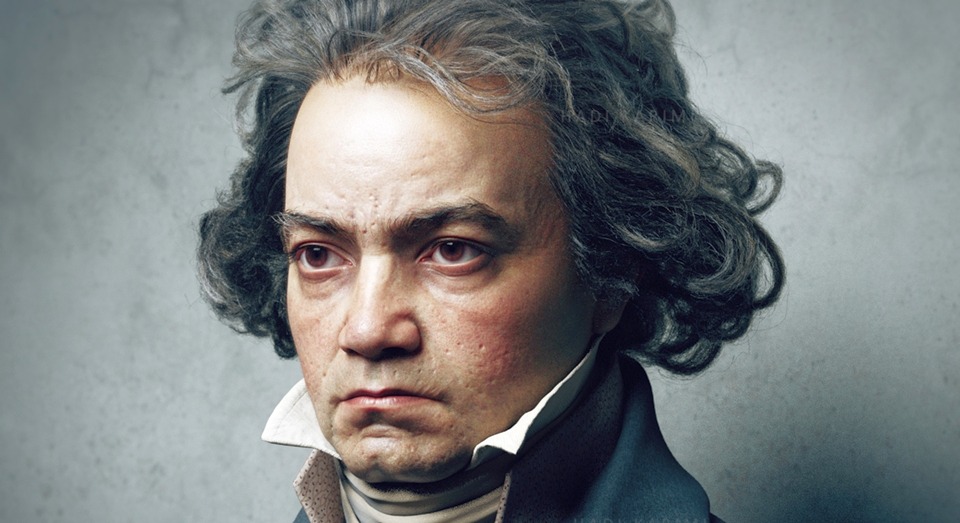
In complete contrast, German then performed Chopin’s Nocturne Op. 9, No. 1 in B-flat minor. And incidentally, the word nocturne (meaning “of the night”) was first used to describe 18th-century ensemble pieces intended for evening performances at courtly social events. The first nocturnes for solo piano were “invented” by the Irish composer John Field and usually took the form of a flowing melody with a gently rhythmic, guitar-like accompaniment. The most famous exponent of the piano nocturne was Frédéric Chopin, who wrote twenty-one of them and transformed John Field’s relatively simple style into something more complex and symphonic.
The lyrical Nocturne Op. 9 No. 1 in B-flat was written between 1831 and 1832 and has the rhythmic freedom typical of the composer’s later work. German played the piece with a good sense of “line”, excellent balance between the left and right hands and strong dynamic contrast. The pianissimo chords at the end were most expressive.
German continued his recital with Chopin’s Nocturne Op. 9, No. 2 in E-flat, often regarded as the composer’s most famous piece. I enjoyed the performance, though at times the articulation felt unclear, and I think he could have brought more drama and romance to the music. “Almost there”, I scribbled in my notes, “but not quite.” To be fair, that afternoon I’d listened to the 1965 recording of the same work by the incomparable Arthur Rubinstein, the brilliant Polish-American pianist, widely regarded as one of the greatest Chopin interpreters of his day.
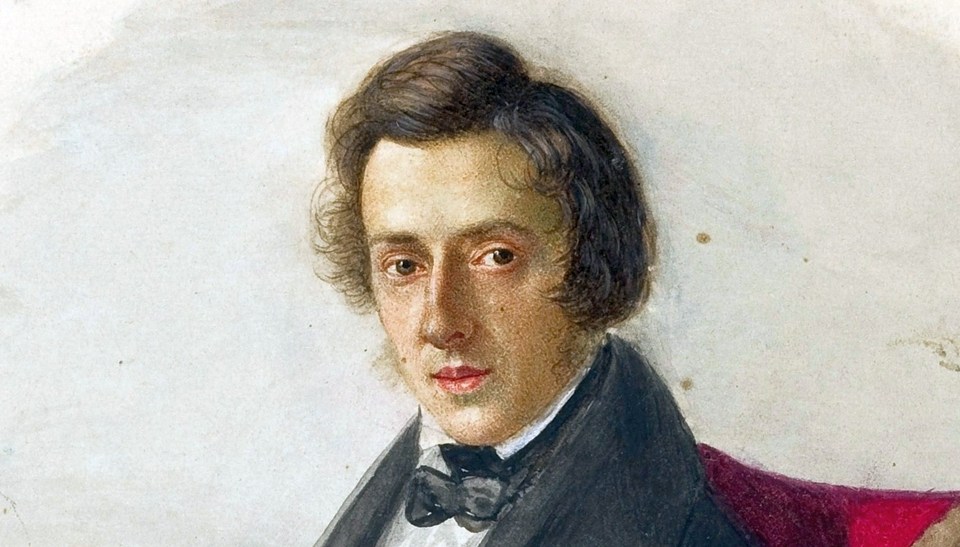
German performed two Chopin waltzes, which seemed to me two of the evening’s musical highlights. The word “waltz”, by the way, comes from the word waltzer, which means “to revolve”. The dance originated during the 18th century and was originally a peasant dance before becoming elevated to the ballroom. Chopin transformed the dance into a sophisticated solo piano work. The Waltz Op. 70 No. 2 in F minor dates from 1842, when the composer was in Paris. The story goes that Chopin wrote five versions of the piece and secretly gave each one to a different woman, telling her that it was composed for her alone, and that she should keep it a secret. “I would not like it to be made public”, he wrote to each of them. You bet he wouldn’t! Fortunately for us, this delightful little piece did eventually become public, and German gave a charming performance, technically faultless with beautifully shaped phrasing.
Chopin composed his bittersweet Waltz Op. 70, No. 3 in D-flat in 1829, and it features a melody and slightly chromatic counter-melody both played by the right hand. German brought out the counter-melody clearly with beautifully shaped phrasing, adding fascinating, measured depth to the performance.
German concluded the first part of his recital with one of Chopin’s ballades. A ballade was originally a song, often with several verses sung to the same melody. Like the nocturne, Chopin took the ballade and transformed it into something completely different – an improvisatory-style work of complexity and emotional depth. Some of his ballades are among the most challenging pieces in the piano repertoire.
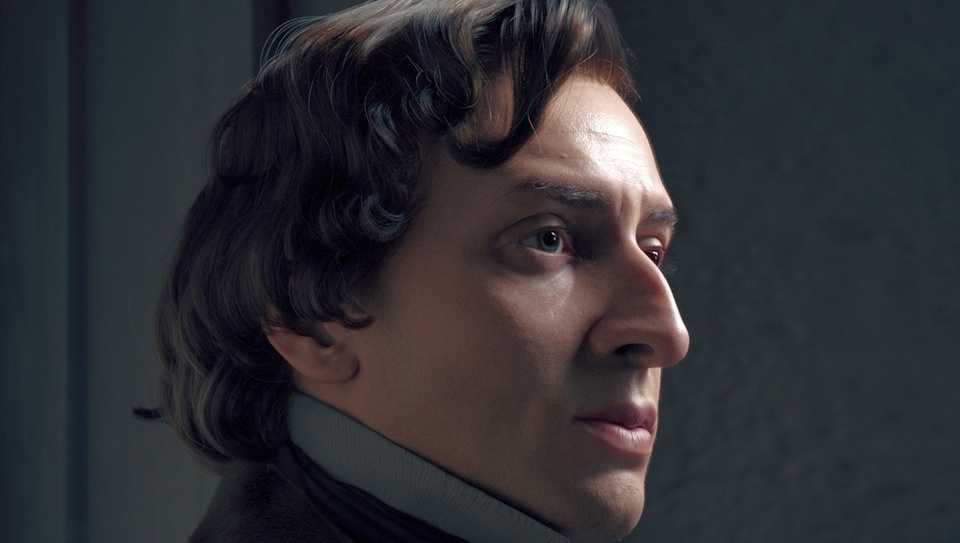
Chopin’s Ballade Op. 52, No. 4 in F minor dates from 1842 and opens with a fragile, limpid melody accompanied by arpeggiated chords in the left-hand part. The extended melody shifts from major to minor tonalities, bringing different shades of mood. Of the four ballades, many pianists consider this the most difficult, both technically and musically. It is also the longest. Pianist John Ogdon wrote, “It is the most exalted, intense and sublimely powerful of all Chopin’s compositions…it lasts only twelve minutes but contains the experience of a lifetime.”
German gave a splendid performance, with expressive phrasing of the melodic lines. He took the technical demands in his stride and made the difficult declamatory octaves in the left hand seem effortless. The lyrical, pastoral passages were superbly played too. This is a work for advanced pianists with the highest level of technical and musical ability, and German Kitkin delivered a splendid performance that the audience met with wild enthusiasm.
German was born in 1994 in the Russian city of Orenburg, which lies on the banks of the Ural River and close to the border with Kazakhstan. It’s nearly a thousand miles southeast of Moscow. He began his musical education at the age of seven and has since gained significant recognition. He won the International Neuhaus Contest-Festival for young pianists and graduated from the Kazan State Conservatory, then the Moscow Chopin State College of Musical Arts, and later the Moscow Tchaikovsky State Conservatory. He has been a soloist at the St. Petersburg House of Music, and in 2022 he received the Aspen Festival Special Prize. He holds the Yamaha Music Award and is a scholarship holder of the Prefect of the Central Administrative District of Moscow and the Rostropovich Charity Foundation. German has played with various orchestras, including the Hamamatsu Philharmonic Orchestra, the Seto Philharmonic Orchestra and the Takamatsu Philharmonic Orchestra.
During the 1840s, the Hungarian composer and pianist Franz Liszt was at the height of his fame and known throughout Europe. His concerts were enormously popular and sparked a surge of public enthusiasm. The German poet and literary critic Heinrich Heine described it as “Lisztomania”. In 1844, Liszt wrote a set of six piano pieces which he entitled Consolations. These are lyrical pieces much in the style of a nocturne. German began the second part of his recital with Consolation No. 3 in D-flat, which has a magical, serene opening. He captured the spirit of the Chopin-like piece and played with expressive rubato, bringing out the music’s romantic character.
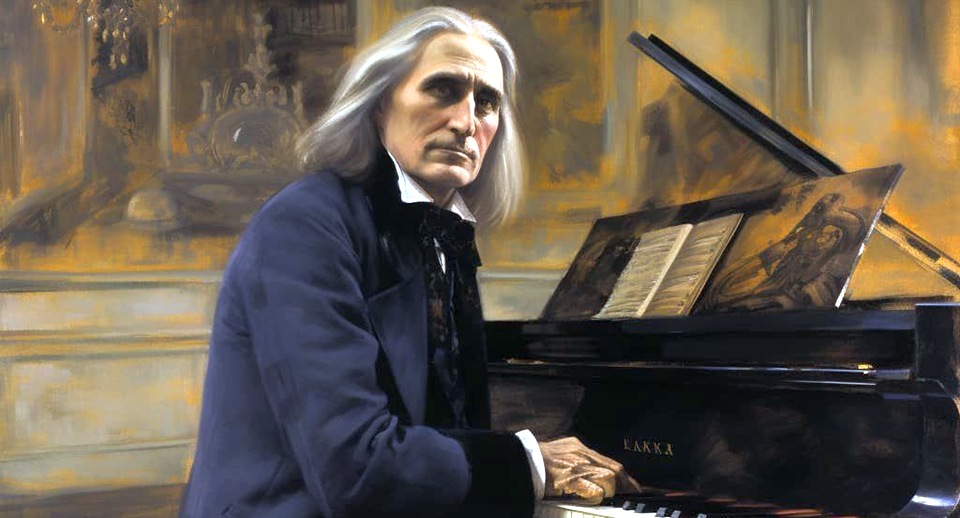
Liszt’s Nocturne No. 3 in A-flat is better known by its nickname Liebesträume, and this familiar melody has travelled far beyond the concert hall and acquired a life of its own. The opening melody shows how the same note can change its character depending on the supporting harmony. The music grows through this single melody, moves away from its home key, gathers intensity and range, expands into a broad chordal culmination, and returns in a subdued form. German delivered a competent performance, emphasising the lovely chromatic harmonic changes. He then played three pieces by two Russian composers synonymous with piano music: Rachmaninoff and Scriabin.
Sergei Rachmaninoff’s Prelude Op. 32, No.12 in G-sharp minor dates from 1910. It’s from a set of thirteen preludes that, during a period of feverish composing, Rachmaninoff completed in just nineteen days after returning from a lengthy tour of America. This prelude has been described as being “all ethereal smoke and zephyrs, the notes cascading across the keys on gossamer wings.” It’s quiet and reflective, and German brought out the melody beautifully with excellent phrasing and acute awareness of dynamics. It takes a fair amount of musical maturity to bring off this delicate piece, and German succeeded admirably.
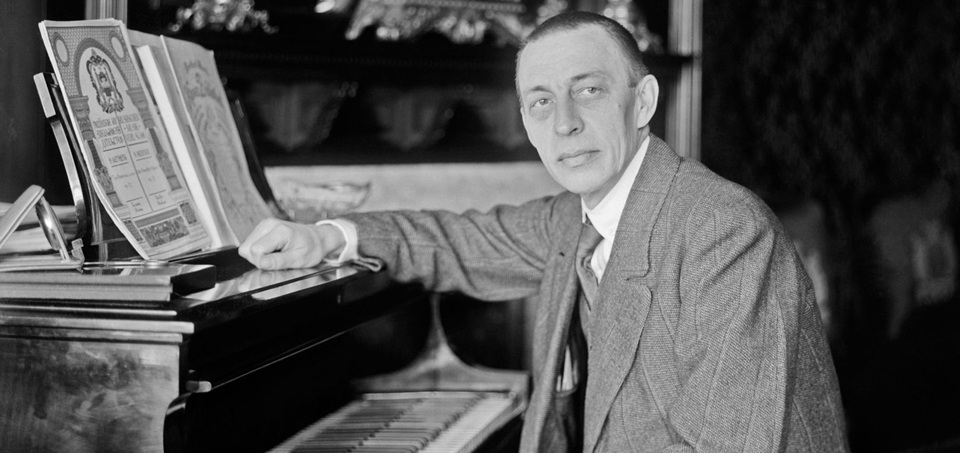
Rachmaninoff’s Élégie, Op. 3, No. 1 in E-flat minor is from a set of five piano solo pieces composed in 1892. German emphasised the profound sense of pathos that runs through this work. The mournful beginning, with its lonely melody supported by left-hand arpeggios spanning multiple octaves, reminded me of Chopin, a composer whom Rachmaninoff admired. The loud, dramatic middle section was played heroically, and German seemed to bring out the music’s intensely Russian qualities.
Without a break, German launched into the evening’s most technically demanding work: Alexander Scriabin’s Étude Op. 8, No. 12 in D-sharp minor. Composed in 1894, it became a favourite encore piece of the distinguished pianist Vladimir Horowitz. Scriabin was especially influenced by theosophy, and his music often reflects his spiritual inclinations. Surrounded by controversy throughout his life, Scriabin was also somewhat eccentric. He did little to discourage people from seeing him as a kind of Messiah, and in Switzerland, he tried to walk on the waters of Lake Geneva. His attempt was not very successful, but he made up for his disappointment by preaching to some local fishermen from a boat.

The technical challenges in this study include many challenging left-hand jumps, with repetitive chords and octaves throughout. The work is a passionate frenzy of sound, and German gave a splendid, technically brilliant performance. He played the many thunderous octave passages flawlessly and kept the raging energy throughout. It was a heroic performance which received the audience response that it deserved.
Claude Debussy’s gentle piece Prélude No. 8 “La fille aux cheveux de lin” came as musical relief after Scriabin’s passionate extravagances. It was a thoughtful programme choice. The title translates roughly as “The Girl with the Flaxen Hair”, and the piece was completed in January 1910. It’s delightfully simple music and in sharp contrast to Debussy’s complex musical style at the time. It’s also one of Debussy’s most recorded pieces, both in its original version and in dozens of subsequent arrangements. German gave an accurate and pleasing performance, though I felt a gentler touch on the keyboard would have been more appropriate.
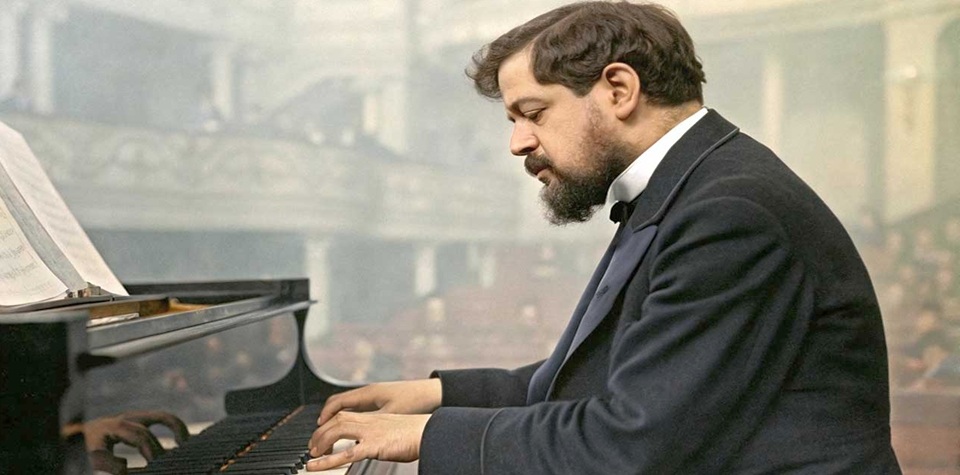
The programme concluded with Debussy’s Rêverie, a reflective, dreamy work composed in 1890. It shows many qualities of the composer’s mature style, but despite its popularity, Debussy didn’t like the piece very much. German gave a lovely, sensitive account of the work, with a beautifully mystical opening. He brought out the pensive, ethereal atmosphere with a well-paced, relaxed performance, with lovely moments in the harmonies that created a sense of floating and irresolution. After all the passion and torment of some of the earlier pieces in the programme, this was a charming way to end the concert.
Of course, the audience wanted more, and as an encore, German stayed in a quiet and reflective mood with Debussy’s Claire de lune. This lovely piece has since become one of the composer’s most famous piano works and one of the most famous pieces of all time. German gave a lovely, sensitive performance, with delicate playing and expressive rubato in the second section. It was another musical highlight of the evening and a thoughtful, expressive way to end the recital.