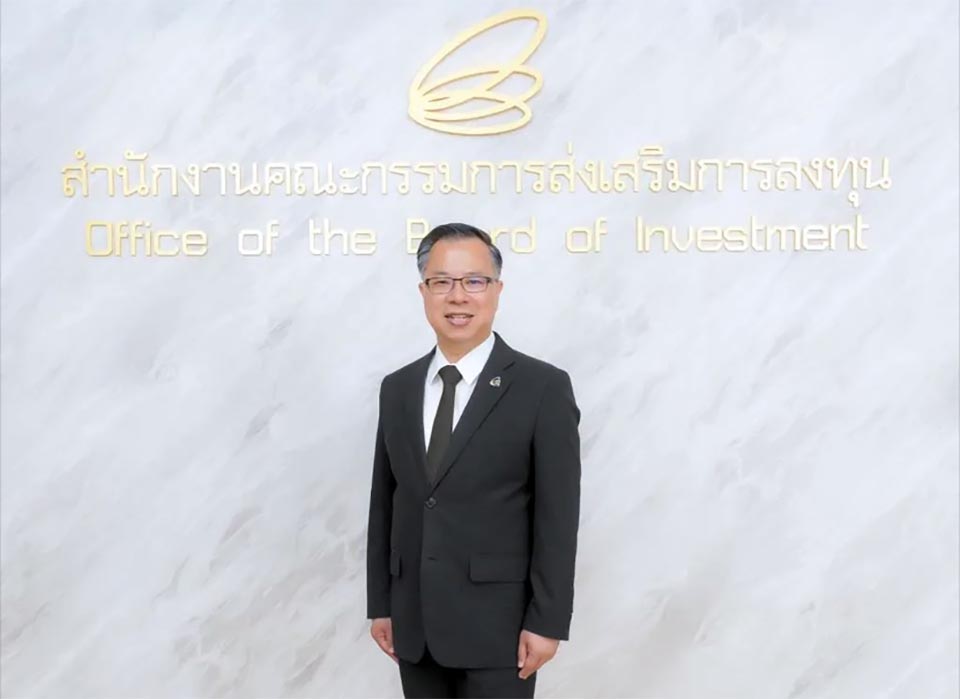
BANGKOK, Thailand – Thailand received investment promotion applications for 35 projects involving advanced materials, nanomaterials and specialised fibres worth more than 23.5 billion baht between 2023 and the first half of 2026, as the country seeks to strengthen its role in high-tech manufacturing. Narit Therdsteerasukdi, Secretary-General of the Thailand Board of Investment (BOI), said the projects cover materials and components used in electronics, electric vehicles (EVs), batteries, clean energy and precision manufacturing.
Advanced materials help products become lighter, stronger and more efficient while improving heat management, resistance to high temperatures and chemicals, and electrical performance. Developing domestic production capabilities could also reduce reliance on imports and help Thai businesses enter higher-value global supply chains.
Among the key investments are multilayer ceramic chip capacitors (MLCCs), essential components in electronic devices ranging from smartphones to advanced artificial intelligence servers. A high-end AI server can require as many as 30,000 MLCCs. Thailand already hosts major manufacturers in this sector, including Murata Electronics, the world’s largest MLCC producer, with a market share of more than 35%, and Kyocera AVX Components, a leading global manufacturer of tantalum capacitors.
Other projects include synthetic and natural graphite films used to transfer and dissipate heat in modern electronic devices, as well as specialised glass-fibre and quartz-fibre materials used in printed circuit boards (PCBs). These materials are increasingly important for advanced electronics and AI servers. Companies involved in specialised fibre production include Taiwan-based Fulltech Fiber Glass, which manufactures glass-fibre fabrics for PCBs, alongside Pamica (Thailand) and Simax Composite, which produce quartz-fibre and fibreglass materials for electronics.
Investment is also flowing into materials for EVs, batteries and clean energy. Projects include carbon-coated aluminium and copper foils for lithium-ion battery systems, neodymium magnets and motor components, and expanded graphite used in batteries. Other products include bipolar plates, which are important components in hydrogen fuel cells. In the nanomaterials sector, Golden Egret Cemented Carbide is investing in tungsten powder, tungsten carbide powder and metal alloy powders used to manufacture cutting tools and precision industrial components.
CoorsTek Advanced Materials, part of the US-based CoorsTek group, is producing advanced ceramic materials for automotive pressure sensors and silicon nitride balls used in hybrid bearings for electric vehicles and wind turbines. Narit said global demand for specialised materials was growing as manufacturers sought products that were smaller, lighter, stronger and more efficient. He described advanced materials as a foundation for future industrial supply chains, particularly in electronics, EVs, batteries and clean energy. The BOI sees the investment pipeline as an opportunity to expand Thailand’s domestic manufacturing capabilities, attract technology-intensive businesses and move the country’s industrial base towards higher-value products.