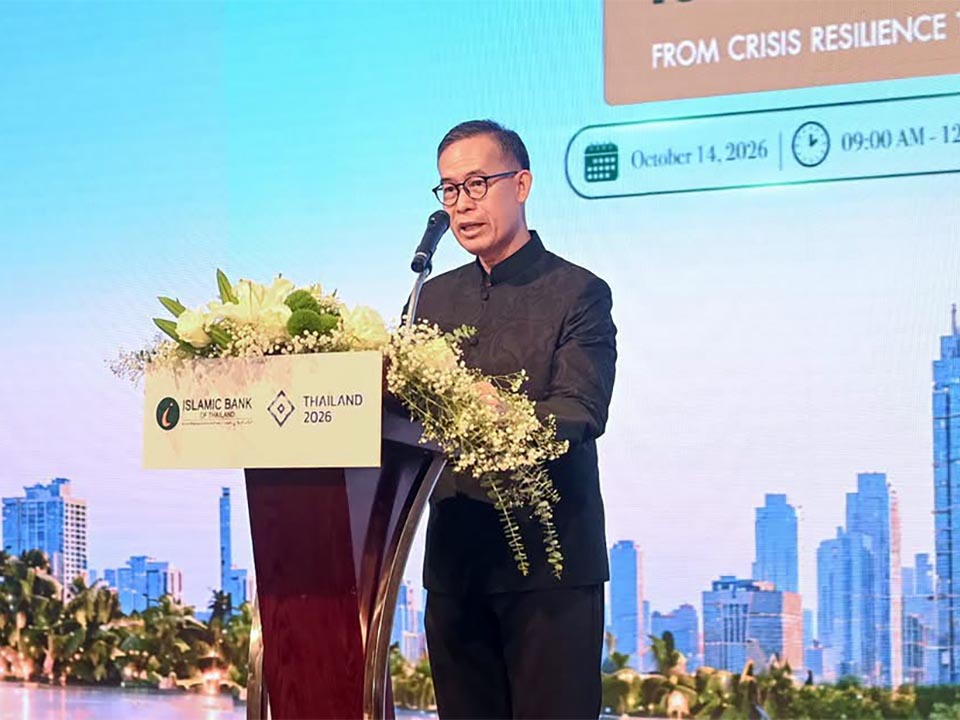
BANGKOK, Thailand – The Islamic Bank of Thailand (iBank) has hosted the Islamic Finance Forum as an official affiliated program of Thailand’s 2026 IMF–World Bank Group Annual Meetings, bringing together international stakeholders to discuss how Islamic finance can enhance financial resilience, drive economic development, and promote shared prosperity.
Held under the theme “Islamic Finance: From Crisis Resilience to Transition Finance,” the forum explored how Islamic financial principles and instruments can help economies address global uncertainty, manage risks, and build more inclusive and sustainable financial systems.
Dr. Thaweelap Rittapirom, President and Director of the Islamic Bank of Thailand, welcomed participants and emphasized the importance of international cooperation in expanding access to financial opportunities. He noted that sharing knowledge among stakeholders can help countries address poverty and economic challenges, while also creating opportunities for sustainable development.
Sheikh Islam of Thailand Arun Boonchom highlighted the forum’s significance amid mounting challenges facing the global economy. He described Islamic finance as a bridge connecting financial systems and the global economy, with the potential to strengthen stability, promote shared prosperity and support peace. The gathering also gave participants from different sectors an important opportunity to exchange views and identify areas for cooperation.
H.E. Dr. Muhammad Sulaiman Al-Jasser, President of the Islamic Development Bank (IsDB) Group, welcomed Thailand’s role as host of the IMF–World Bank Group Annual Meetings and noted that the last meetings in Thailand were held in 1991. Dr. Al-Jasser emphasized that good governance and transparency are essential for building confidence in financial institutions and supporting their long-term growth. He also highlighted the need for effective risk management and ongoing development of Islamic financial institutions to help them respond to market volatility and evolving economic needs. (NNT)