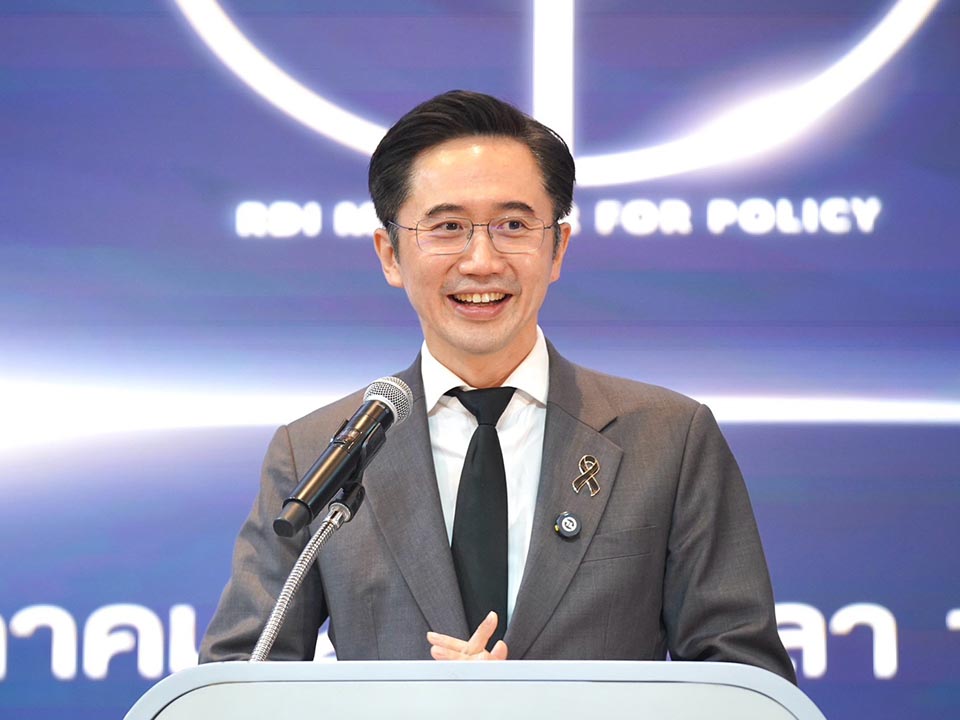
BANGKOK, Thailand – Deputy Prime Minister and Higher Education, Science, Research and Innovation Minister Yodchanan Wongsawat has called for stronger cooperation between government agencies, private companies and researchers to develop homegrown technology, strengthen human capital and improve Thailand’s international competitiveness.
Yodchanan made the remarks while presiding over the closing ceremony and certificate presentation for the third cohort of the Research Development and Innovation Manager for Policy program (RDI MAP 3). The program aims to develop research and innovation management professionals who can connect research findings with policymakers and ensure that policy-oriented research produces practical results and wider social and economic benefits.
Yodchanan said participants would play an important role in shaping policy and guiding their organisations at a time when government budgets are facing growing constraints. Effective policymaking requires systems thinking, clear planning and cooperation across government, business and research sectors. He highlighted the importance of connecting value chains from local communities to major international companies, creating opportunities for new ideas and helping transform existing limitations into new possibilities.
Thailand is approaching a turning point that requires new economic growth drivers alongside investment in human capital, science and technology, he said. The country should move beyond relying heavily on procurement and imported technology towards conducting more research and development, upgrading workforce skills and developing innovations in partnership with the private sector.
Building technology domestically could significantly reduce expenditure while creating a stronger foundation for long-term national development, Yodchanan said, urging program graduates to apply their knowledge and professional networks to policies that deliver positive and sustainable outcomes.
The ceremony was attended by Sriyada Palimaphan, adviser to the higher education minister; Prof. Dr. Sompong Klainongsuang, director of the Thailand Science Research and Innovation agency; and Assoc. Prof. Dr. Suwit Chaitea, president of King Mongkut’s University of Technology Thonburi, along with program participants.(TNA)