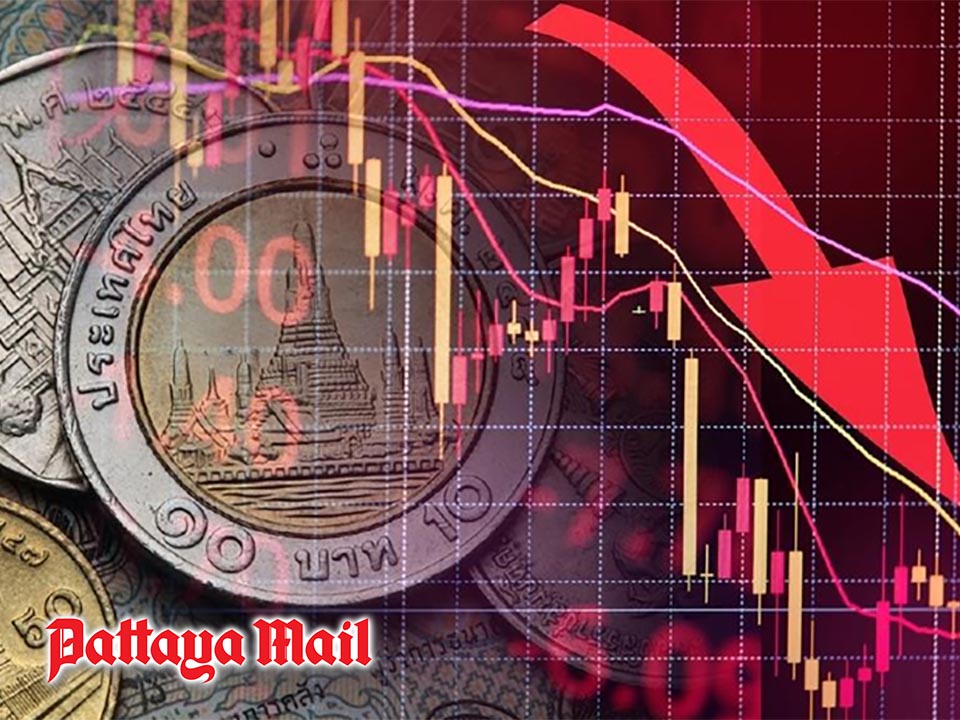
BANGKOK, Thailand – The Thai baht could weaken again in 2027 as US bond yields remain elevated, Thailand’s economic recovery stays uneven and political uncertainty surrounding elections in several countries adds pressure to global financial markets, SCB Financial Markets (SCB FM) forecasts. SCB FM expects the baht to trade between 33.25 and 33.85 to the US dollar for the remainder of 2026, before weakening to around 33.80 in the first quarter of 2027 and approaching 34.50 in the third quarter. The currency could recover slightly towards the end of next year.
Patrick Poulier, Head of Financial Markets at Siam Commercial Bank, said the baht had fluctuated within a narrower range over the past month but remained sensitive to the Iran conflict, oil prices and global interest rates. The US dollar strengthened after the Federal Reserve signaled continued concern about inflation, while US Treasury yields rose amid worries about the federal budget deficit and heavy bond issuance. Political and fiscal uncertainty in France also weakened the euro and supported demand for the dollar as a safe-haven asset.
However, stronger-than-expected Thai export growth in August helped support the baht by narrowing the trade deficit. Increased oil supplies from the Persian Gulf and easing pressure on oil prices have also reduced the risk of a sharp further depreciation. SCB FM sees some near-term downside for the baht, including the possibility of additional US import tariffs on Thai goods under Section 301 and potential dollar strength ahead of the US midterm elections in November.
For 2027, the bank expects persistently high US Treasury yields and Thailand’s uneven, or K-shaped, economic recovery to weigh on the currency. Growth remains heavily reliant on electronics exports and the US market, while domestic consumption and parts of the labour market continue to recover slowly. This could encourage the Bank of Thailand to keep its policy rate at 1%, leaving the interest-rate gap between Thailand and other economies as a continuing source of pressure on the baht.
Potential factors supporting the currency include fewer Federal Reserve rate increases than markets currently expect and a possible temporary US government shutdown linked to budget negotiations. SCB FM also expects the Iran conflict to ease next year, allowing oil prices to return towards more normal levels.
Wachirawat Banchuen, Senior Financial Market Strategist at Siam Commercial Bank, said long-term US Treasury yields had climbed to their highest levels in more than two decades, driven by concerns over the federal deficit, substantial corporate bond issuance by major technology companies financing artificial intelligence investment, and inflation risks linked to conflict in the Middle East.
SCB FM expects the US Treasury yield curve to steepen. The two-year yield could fall to 4.15–4.35% by the end of 2027 as the US economy slows, while the 10-year yield may remain elevated at 4.70–4.90% because of fiscal pressures, heavy bond supply and the possibility of a higher long-term neutral interest rate as AI improves productivity.
The US midterm elections could also influence bond yields and the dollar. SCB FM said a change in congressional control could constrain new fiscal measures under President Donald Trump and potentially reduce government spending, although tariffs could still be pursued through presidential powers. A Republican sweep, by contrast, could raise concerns about further tax cuts and spending, increasing pressure on the federal deficit and long-term yields.
In Europe, uncertainty surrounding France’s political direction and public finances remains a concern for currency markets. A government led by far-right or far-left groups could increase investor concerns about fiscal policy and relations with the European Union, potentially widening the yield gap between French and German government bonds and weakening the euro. A centrist outcome or continuation of the current political direction could ease some of those concerns, although France’s fiscal challenges would remain.