FEATURES

HEADLINES [click on headline to view story]:
 
Preserve the Traditions of Pattaya
 
Republic of Turkey celebrates 75th Anniversary - 29 October 1998
 
Czech Republic’s National Day celebration October 28
 
Austrians celebrate 43rd National Day on 26 October
 
Spicy times at the Som Tam competition
 
Successfully Yours: Catherine Bond
  
AutoMania

Preserve the Traditions of Pattaya

Editorial by Kittisak Khamthong

Before Pattaya became a resort well-known for its golden beaches and year-round sunshine, it had a place in Thai history.

In 1769, before Ayuthaya was ransacked by the Burmese, King Taksin the Great was the Duke of Kamphaeng Phet. Surrounded by the Burmese and almost certain that the small city of Ayuthaya would fall, he gathered an army of over 500 of his best men, left Wat Pichai Camp and headed for the Southeast.

Arriving in Chonburi, King Taksin and his army rested at the present Wat Yai Intararam Temple. They then headed for Chantaburi. During this journey, they rested at Ban Nongphai in Naklua, Banglamung District.

History books tell us that, "the next day, this infantry division came to Jomtien and Tung Kai Tia in Sattahip. The army rested at each place for one night. The villagers named this place Thapphraya (which means the "Royal Army"). King Taksin deemed it a good place for his troops to rest because it had a nice ocean wind, called Pattaya, which blew from the southwest to the southeast at the onset of the monsoons. King Taksin named this place "Pattaya Village".

Pattaya later became a fishing village, and the early settlers were able to build on the beach without breaking any of the Royal Laws of those days.

Unlike today, about 40 years ago land in Pattaya was not considered to be of much value due to the relative infertility of the land. No cash crops could be grown in the area, so there was hardly any buying and selling of land and if there was, prices were very cheap. So cheap that it is recorded that some people would exchange beachfront property for liquor or give the land away. There were no documents of sale or title deeds. The only markers used to delineate boundaries were posts or large trees.

The big change in Pattaya came in the year 1959 when four or five trucks carrying 100 American soldiers came to Pattaya for ‘rest and recreation.’ They rented houses belonging to His Highness Phraya Sunthorn, which were on the southern beach. That was the beginning of the development of what we call today the South Pattaya Strip.

Pattaya was made a ‘Sukhaphibal’ or ‘Sanitation District’ in 1957, and by the early 1970s Pattaya was becoming a well-known destination for tourists from different parts of the world. The residents watched as the village grew in a disorderly fashion without any control or ‘problem prevention’ laws enacted. This was disastrous for the environment and sea ecosystem in the area.

Pattaya’s status was raised to ‘Special City’ on November 29, 1978. The government assigned a ‘professional’ City Manager to administer the city. Since that time, the city has met with total failure in development and pollution control.

The government engaged Jaico (Japanese Assistance Organisation) in 1990 to survey the city’s problems and formulate long term solutions. The company came up with several projects, including wastewater treatment plants, the tourist pier, the beach landfill project, the expansion of the beach, the building of Pattaya Third Road and a rubbish removal system, at a cost of 3,600 million Baht. Three of these projects have been approved and completed.

The Environmental Standards Board did not approve the other projects, namely the landfill project, the tourist pier and the expansion of the beach.

The Board felt that these would have adverse effects on the very sensitive and dying ecosystems in the area. The Board later approved three ‘sub-projects’: the tourist pier, a smaller landfill project and the demolition of the 101 buildings constructed on government property. (The earlier proposal was to allow the 101 property owners to maintain their premises of not more than 40 meters from the beach road, and the rest would be part of the landfill project extending into the sea with a road built which would connect Third Road and the beach. The landfill would be developed into a beach promenade for recreational purposes for the populace.)

The Cabinet recently agreed with the Board of Environmental Standards and approved the demolition of the 101 buildings. This caused great consternation among the ‘trespassers’ who wrote a letter of protest to Mr. Sonthaya Khunpleum, Deputy Minister of Communications and MP for Chonburi, District 2. This letter requested that the lawmakers help the residents by having the government review its decision. The trespassers felt that the projects would only benefit powerful politicians and were not in the best interests of Pattaya’s average citizen.

When tourism began to boom in the city, the area changed from a fishing village to a shopping and entertainment sector. This happened very rapidly with no supervision from the government or public organizations.

Fortunately, now some government organizations have become involved in the revival of Pattaya. The various public authorities have stepped up the work and begun new projects to improve the city’s atmosphere. Improvement is noticeable and the wastewater treatment plant now under construction should improve Pattaya’s environmental problems. Pattaya’s citizens are totally confident that the city’s tourism industry will soon return to the roaring success it enjoyed more than 10 years ago. The economy, commerce and the people’s lifestyle will be as it was before.

South Pattaya’s shopping and entertainment sector has its own character, which has become a symbol of Pattaya’s ‘image.’ The South Pattaya Strip is where it all began. In keeping with the trend to innovate and renovate, the citizens of South Pattaya have taken steps to further improve themselves. By using their own funds to publicize the strip they organized a working committee, made improvements, and organized functions to attract tourists by involving all the business people. Thus the ‘Walking Street’ was named.

What needs to be taken into very serious consideration here is that like any town or city in the world there has always been a little spot where it all began. People of different countries have always striven to preserve that area. Some called it the "old city". We, too, have our very own old city. Citizens of Pattaya must fight to preserve it. This is a historical site, one that will be remembered in generations to come as where it all began. This is what they will remember as the spot where their forefathers lived and worked, and the fame that it brought to Pattaya, bringing in millions of visitors to make Pattaya what is today and what it will become in the future. Pattaya must be proud of her traditions and her humble beginnings. The powers that be must keep in mind that Pattaya deserves to cling to these traditions.

In this day and age of the most advanced technologies, there must be many ways to tackle the problems of sanitation and preservation of the environment. Worse spots have been cleaned up and are now the pride and beauty of their cities. Do not opt for the easy way out, for it is not you, who do not understand the beginnings of Pattaya, who should decide to tear down her history. The government should not ignore the desires of Pattaya’s average citizens. You should consider carefully what you are doing. Remember that South Pattaya was the city’s true ‘birthplace’ and its ‘identity’ was created there. It is here that the livelihood of 50,000 Thai people are at stake. The residents of South Pattaya believe the government has not seen this and must re-evaluate the situation.

Is it a wise move to demolish the buildings in South Pattaya? Wouldn’t it be much better to use the money for development of "the Strip" and other areas?
Back to Features Headline Index

Republic of Turkey clebrates 75th Anniversary - 29 October 1998

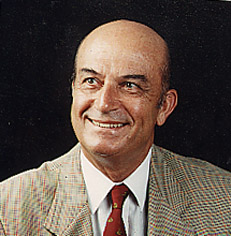
Message from H.E. Mr. Yalcin Tug
Ambassador of the Republic of Turkey

f2.JPG (27734 bytes)(October 29) Marks the 75th Anniversary of the founding of the Turkish Republic, which we celebrate with pride and renewed confidence.
On this auspicious occasion I would like to convey, on behalf of the government and people of Turkey, our greetings and best wishes to Their Majesties, the government and the people of the Kingdom of Thailand.

The Republic of Turkey, proclaimed 75 years ago, has two rich legacies from a distant past. The first is the glorious past of the Turkish people that dates back 4000 years ago. The second is the history of Anatolia where the Turks started settling since the 11th century. Anatolia is the cradle of historical treasures of several civilizations. Located where the Asian and European continents meet, it has always acted as a bridge between the two continents, geographically, culturally and economically. This unique and strategically important location gives the country a major advantage in many fields.

29 October 1923 has a very special place and significance in Turkish history, since on that day, 75 years ago, the Turkish parliament proclaimed Turkey to be a Republic, thus opening a new chapter and marking a turning point in the history of the nation under the leadership of Mustafa Kemal Atatürk.

It was the proclamation of the Republic as a form of government and a array of accompanying reforms - foremost of them secularism, modern education, and modernization in every field - that ushered Turkey into a new era of continued progress, and democracy. This has been the most prestigious achievement realized, against all odds, by the Turkish people and the great leader Mustafa Kemal Atatürk.

Atatürk, with his great achievements, including the successful conduct of the National Independence War, and his progressive reforms, became a source of inspiration, courage and strength for many other peoples who emerged as new independent states in Africa, Middle East and Asia.

Since that auspicious day of its founding, the new and young Republic has been consolidated by a series of reforms and a successful free market-oriented economic development which has won Turkey recently a distinguished standing as the 16th biggest economy in the world.

Turkey is determined to continue its dynamic progress along the principles of Kemal Atatürk, as a secular and democratic country and as an invaluable element of stability in the vast region stretching from Europe and the Mediterranean to the Middle East and Central Asia.

I am very happy, like the whole Turkish community here, to celebrate this auspicious event on the friendly soil of the Kingdom of Thailand.

Turkey and Thailand may well be geographically distant but their friendship and cooperation are traditional and strong.

I believe that it is incumbent upon us all to spare no effort for further strengthening our bilateral ties in every field. I am confident that we shall succeed in achieving this aim.

I would like to take this opportunity to express my deep thanks to the Pattaya Mail newspaper for giving me the privilege to address its readers.

Yalçin Tug,
Ambassador of the Republic of Turkey

Back to Features Headline Index

Czech Republic’s National Day celebration October 28

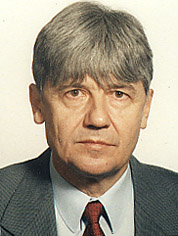
Message from H.E. Dr. Jan Becka
Ambassador Extraordinary and Plenipotentiary of the Czech Republic

f7.JPG (18816 bytes)On the auspicious occasion of the Czech National day I extend my greetings to all Czech nationals living in the Kingdom of Thailand, as well as to the friends of the Czech Republic among the Thai people.
On October 28 the Czech people commemorate the 80th anniversary of that day in 1918, when the independent state of Czechs and Slovaks, Czechoslovakia, came into existence. After the peaceful division of Czechoslovakia on 1st January 1993, the Czech Republic, as one of its successor states, chose to retain October 28 as its National Day because to many Czechs it symbolizes the traditions of their statehood and their commitment to the ideals of democracy and freedom.

The Czech Republic is a Central European country consisting of three historical lands (Bohemia, Moravia and Silesia), with roots tracing back to the early Middle Ages. During the 16th Century, the Czech lands became a part of the Habsburg-ruled Austrian (later Austro-Hungarian) Empire, losing their independence for a long time. In October 1918, with the disintegration of the Austro-Hungarian Empire, the Czech lands regained their independence as a part of the newly formed Czechoslovakia. The existence of Czechoslovakia was interrupted by the German occupation of the country (1939-1945), to be restored at the end of the Second World War. The political developments in Czechoslovakia, following the restoration of democracy in November 1989, led also to the constitutional reforms of 1992 marking the division of Czechoslovakia into two independent successor states - the Czech Republic and the Slovak Republic.

Since 1993, the Czech Republic has been undergoing major changes, completing the process of transformation of the former centralized state system into a parliamentary democracy and market economy. This process has not been without some problems. The more recent years were not easy, particularly in the economic field. Nonetheless, the Czechs are confident of the growing status of their country as that of a democratic and developed nation. The Czech Republic is endowed with a rich cultural heritage and high quality human resources, undoubtedly the assets for further economic growth and social progress.

The interest to become fully integrated into the European and, more broadly, world community, was among the main factors which led the Czech Republic to join various international organizations, for example the Organization for Economic Cooperation and Development (OECD) in 1995. Presently, the Czech Republic aims to become a member of the North Atlantic Treaty Organization (NATO) as well as a full member of the European Union. Those two goals are also among the top foreign policy priorities of the new Czech Government which came out of this year’s parliamentary elections. The Czech Republic, Poland and Hungary are expected to join NATO in 1999. The Czech Government believes that the integration into the Alliance of these countries will justify the enlargement of NATO and its contribution to European security. The chances of the Czech Republic to become a full member of the European Union in the near future have also become more real by now.

The relations between the Czech Republic and the Kingdom of Thailand have continued to grow on various levels over the past few years. People-to-people contacts, through tourism and cultural exchange, have also expanded. Thailand is a favorite destination for many Czech travelers, while, on the other bank, the Czech Republic, especially its capital city of Prague (Praha), are very popular with Thai visitors. There is, of course, still a potential on both sides for greater business links and economic cooperation. In my capacity of the Ambassador of the Czech Republic to the Kingdom of Thailand I wish to express the hope that the bonds of friendship between our two countries and their people will continue to grow in the year that lies ahead.

On the occasion of Czech National Day, I have the honour to convey on behalf of the President, the Government and people of the Czech Republic my best greetings and sincere good wishes to Their Majesties, the King and Queen, the Royal Family and the government and people of Thailand.

Dr. Jan Becka
Ambassador Extraordinary and Plenipotentiary of the Czech Republic

Back to Features Headline Index

Austrians celebrate 43rd National Day on 26 October

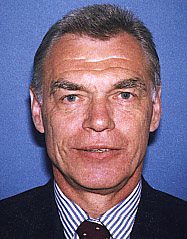
Message from H.E. Dr. Georg Znidaric
Ambassador of Austria

f8.JPG (26182 bytes)On the occasion of the Austrian National Day on 26 October I have the honor to convey my sincere and warm greetings to their Majesties the King and Queen of Thailand, the Royal Family, the Government and the People of the Kingdom of Thailand. On that day in the year 1955 Austria regained her full sovereignty and independence after almost two decades of annexation, war and foreign occupation.
This year the National Day of Austria is celebrated in a period of particular importance. It is the first time since the days of the long gone Austro-Hungarian Empire, when Vienna was one of the political centers of power in Europe, that Austria again plays an important role in political activities of Europe by having assumed the Presidency of the European Union for the second half of 1998.

This is the actual result of a development which more or less began on October 26, 1955, the day we are celebrating, the day when Austria after a dark period of annexation, war and occupation began to develop, modernize and restructure its economy. Since then our country has experienced a development which has brought us unprecedented prosperity. The way to the prosperity we enjoy now was not a straight upwards development, was not a linear one, but was characterized by quite a lot of ups and downs, obstacles and crisis’s.

These ups and downs Austria had to pass, to get there, where we are today, confirm my conviction that also Thailand will emerge strengthened out of the present crisis. The amazing development which Thailand took in the last two decades did not come by itself, but was the product of the diligence, ingenuity and creative power of its population. These qualities have not disappeared with the present crisis and will therefore again be the source of a re-establishment of its prosperity in the near future.

Austria, her institutions, universities and enterprises try to be a useful and helpful partner in this development. In spite of the prevailing economic crisis not only the larger Austrian enterprises but also small and medium-sized firms continue to look for partners in trade, cooperation and investment in this country. As a consequence, bilateral trade keeps growing these years; for example, the 36 three-car trains of Bangkok’s Sky Train project are made in Austria.

In the wake of the Asian crisis Austrian exports have naturally dropped off dramatically, by 26% in 1997 and again in the first six months of 1998 by 23% according to Austrian statistics.

As for Austria’s imports it can be pointed out that, with the exception of a few years, the trade balance has always been in favour of Thailand. In the first six months of 1998 Thai exports to Austria rose significantly, resulting in a Thai trade surplus of 600 million Baht.

One of the most successful projects of Austria development cooperation has been the Thai-Austrian Technical College (TATC) in Sattahip, which was founded in 1970. From its beginnings TATC has been a model school, combining a high level of technical education with excellent technological equipment. Austria has continued to support TATC by providing advanced training for the teaching staff at technological colleges in Austria and by periodically replacing out dated machines and machine tools with new and up to date equipment.

Another example of partnership is the long-standing cooperation between our two countries in the field of science and research involving several leading Austrian and Thai universities. When the most important universities in Thailand communicate and coordinate their scientific efforts, they do so not only among themselves, but within a grid of 30 universities in Indonesia, Vietnam, the Philippines, Austria, Denmark, Great Britain, Spain and Czech Republic. This so-called ASEA-UNINET, the Austrian South East Asian University Partnership Network, is the result of a scientific partnership of Chulalongkorn University and the University of Innsbruck which began 30 years ago.

It is my conviction, not only a wish, that these initiatives, particularly those in the field of human resources development, contribute in a sensible and sustainable way to the manifold efforts of the industrious people of Thailand to re-establish their story of economic success. Let me therefore extend my personnel greetings also to all Austrians living in Thailand and to all friends of Austria.

Dr. Georg Znidaric
Ambassador of Austria

Back to Features Headline Index

Have you ever seen a guard dance?

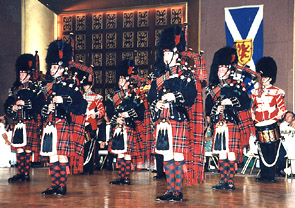
Now you have a unique opportunity to see the Royal Scots Guards, direct from a tour of duty in Northern Ireland, here in Pattaya. Yes, the soldiers from a Regiment of the British Army are coming here to help celebrate St. Andrews Night in spectacular style.

f6.JPG (49096 bytes)The Royal Scots Guard.

They will be marching, drumming, playing the bagpipes and dancing the Highland Fling - a truly professional and awe inspiring sight. This will be an extremely moving and privileged experience that you will tell your grandchildren about. Don’t miss out - book your ticket now.

The Pattaya International Ladies Club is organizing a Charity Ball. In aid of the Redemptorist School for the Blind, Camillian Social Center for Aids Relief and the Fountain of Life School. This event will be held at the Royal Cliff Beach Resort on Friday, 27 November at 7:30 p.m. Admissions is by ticket only, which cost 1350 baht each to include a 4 course dinner, half bottle of wine each, whiskey toast, photograph, dancing to Tony and Friends and of course this most outstanding cabaret. Please phone Mary on 306 067, Akiko on 370 537, or Yvonne on 306 090 to obtain tickets, which can be purchased individually or for tables of 8.

Back to Features Headline Index

Successfully Yours: Catcherine Bond

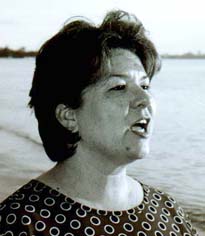
Many have made the acquaintance of the ebullient Catherine Bond, though how many have taken the time to really get to know her? How many of us have been guilty of simply dismissing her as just another pretty face seen everywhere as President of P.I.L.C. (Pattaya International Ladies Club)?

suc.jpg (10010 bytes)Not only is Ms. Bond successful, she has the powerful personality of a warship, together with heart and lung capacity to match. As her son Ben laughingly says, "Ma, you’re like a battleship, it would take days and weeks and tons of water to stop you."

A picture of Catherine, in a few words, is "opera singer, mother, wife, sister, carer, accountant, financial wiz, poet, writer, absolute and eternal optimist, happy, effective, fulfilled, collector, organizer, challenging, an inquiring mind, crossword fanatic, and talented fund raiser." In other words, just your average gal!

After that introductory sketch I can hear you ask, "What else is there to Catherine Bond, other than just a Diva with the stature to match?" Catherine is funny, loveable, and creative. Catherine’s first love is singing, music and drama; her favorites are Wagner and the revolutionary music of contemporary musicians such as the Thai composer Caribou, and Filipino Joey Ayala. She describes these as "Chase away dark wings music, and the perfect rhythm to brush the cat to." Although, "Wagner is generally regarded as hot tub and razor music, I always find it inspiring. I was the baby of the family and my brothers would play that and Russian marches and I would clown about and sing Carmen."

"When I was a sophomore I entered a talent quest and the judges really encouraged me to continue with singing and drama. I trained for a year with Luella Scarpa singing operatic, dramatic soprano. Then I opted out of Uni and joined Fluori, a large American construction company. That is where I met and married my English husband Jonathon in 1987. He encouraged me to complete my degrees so I chose an accountancy/finance double major at the same time as caring for my ailing parents. That was a demanding time, but then I thrive on challenges, I always believe nothing is impossible."

Catherine has put her efforts into community work here. "I wasn’t content to just keep the home accounts while Jonathon was working, so this year I took on the Presidency of the P.I.L.C. I saw it as a way to effectively work in the community. The P.I.L.C. group is more than a bunch of ladies networking, we are not a corporation, although we are formally organized, we are not nationally or religiously affiliated, and we are not selling a product. Therefore our purpose is to do good acts, beneficial to society."

She was instrumental in instigating the United Charities of the Eastern Seaboard, where board members of the P.I.L.C. and committees of Pattaya Rotary and Pattaya Sports Club meet to ensure our combined efforts are well distributed and not duplicated. "I think the P.I.L.C.’s work is constructive, just our directory alone is of enormous benefit to house-bound expats."

So what are Catherine’s plans for next year? "Although this Presidency has given me an awareness for my hidden talents of fundraising and organization, I will not be running next year. I am happy with what I have contributed but I think someone from one of the other international groups should have a chance next year. I would love to have more time for writing and watercolor painting."

As for the future, Catherine and Jonathon share the same dream, "Eventually we would like to retire to a lakeside in Houston. Yes, I know about the mosquitoes and the heat, but when you are from the moon that’s where you want to return to."

Success to Catherine personally is "Not necessarily tangible, it is not $$$. It is the feeling you get when you achieve a goal." Her advice to other expatriates here is to "Expand your horizons, learn something new, take up challenges." It is a privilege to know this Pattaya mover and shaker.

Back to Features Headline Index

AutoMania: Thank you, Sultan.

by Dr. Iain Corness

The other evening, one of our regular readers, Bob Lepper, posed an interesting question to me. "Imagine you have just saved the life of the Sultan of Brunei, and he says you can have any car you want - but it is not for resale and you must use it. What would you ask for?"

I plumped for a Porsche 911, while Bob wanted an XJ6 Jaguar. Personally, I believe that the Porsches are the only exotic cars that you can hammer every day and they still come up for more. My pick is the 1973 RS Carrera, the most powerful naturally aspirated 911 they ever made. Guaranteed 150 MPH and a classic. As for the XJ6? Well, I reckon the best thing you can do with an old Jag is use the engine as a boat anchor and drop a Chev V8 in the hole. But Bob would take me to task on that, I’m sure.
auto.jpg (7925 bytes)Really it is a most intriguing question, and one which will bring many answers for all the right (or wrong) reasons. A quick quiz through the office brought out a Ferrari, a Bentley and a Lexus, although the Lexus enthusiast asked if he could have upgrades! So much for trying to say the Lexus is a timeless legend!

I really would like to know what you other Automaniacs think, so fax me at the Editorial Office on 427 596 or email to <[email protected]> and tell me what you would ask for (and why). The most interesting answer will win one of the now famous Automania FREE beers.

Pseudoscience and the motor car

There are consumer magazines for sale all over the world. Most of these do a reasonable job at informing their readers of the essential differences between various brands of consumer products. However, there is always the problem associated with what I call "Pseudoscience". This is where some journalistically inclined "researchers" decide that there should be good objective testing to compare the brands under test.

Now there is absolutely nothing wrong with good objective testing, but the real question is - what constitutes "good" objective tests and how do you differentiate between that and inappropriate testing procedures? I distinctly remember a consumer mob in Australia tested refrigerators by dropping them one metre and measuring the distortion in the cabinet and whether or not they continued to work. This is a fine example of Pseudoscience.

Sure, it may be relevant to know if a product survives rough handling, but how many times have you dropped your fridge? Come on!

Some journalists in the UK with too much time on their hands and too little true scientific training have now managed to apply Pseudoscience to car testing.

Did you see the bit printed in the Bangkok English language paper? "Test confirms reverse stability fears" screamed the headline. For those of you who missed it, Bangkok Post reprinted an article where the fine chaps at "Autocar" magazine in the UK drove a little Hyundai at 23 KPH in reverse gear and when they flung it onto lock it tripped over its own front wheel and turned turtle.

To then show "reproducibility" Autocar got some other cars and tried reversing them at that speed as well. Guess what? A Daewoo fell over as well! Scientific testing works again. Or was it Pseudoscience?

The first item I would like to challenge is simply just who was supposed to be cringing in fear? I have yet to hear of anyone in the world who has been counselled by his parents, "Don’t reverse the car, son, your mother and I are worried about it."

My next question concerns whether it is normal to reverse your car at 23 KPH and do savage steering wheel movements while still accelerating in reverse? Or is that just damn fool driving?

Autocar went so far as to state that no car should ever roll over within its performance envelope when fully loaded (driving in either direction). This is not Journalism or even Pseudoscience - this is unadulterated codswallop!

I know lots of drivers who have the ability to produce a roll over situation - application of power at the same time as a dab on the footbrake and enough steering movement will trip just about anything.

You cannot protect the idiots from misuse of a product. You cannot justify foolishness by repeating the misuse. You cannot pretend to have discovered scientific truth by application of Pseudoscience to that misuse.

No, I remain totally unimpressed with the Autocar’s "fear" provoking expose and would not be surprised if the truth was really that Autocar’s journalist tripped a car while playing around on a test. As a cover-up the "test" was extended and the fear provoking article written.

In a world which has been inundated by "cover-ups" recently, why should we believe Autocar and not be a trifle skeptical? I can tell you that I am!

Autotrivia Quiz

Last week we spoke about the grille badge from Alfa Romeo. The Red Cross and the snake came from the Crusaders of Milan! The cross symbolized the delivery of Jerusalem, while the snake is swallowing a Saracen and commemorates the victories of the Crusaders. Now that’s REAL trivia!

So let’s stick with emblems this week. Everyone has heard of the Prancing Horse of Ferrari. That coal-black stallion on a yellow background. For the Automaina FREE BEER, tell me about the origins of this prancing horse - and while you are at it, what is the connection to aviation? OK, all you Ferrari Tifosi, let’s hear from you!

There’s lots of funny little quirks with the Ferrari story. The model number, for example, is derived from the capacity of one cylinder in the engine. The first Ferrari’s were actually Alfa Romeo’s including the dreadful "Bimotore" which we mentioned a couple of weeks ago. Enzo Ferrari, the firms founder, was a racing driver himself who retired in 1931 and then started his race team "Scuderia Ferrari". It was only later that he began to build road cars under his own name, calling the business "Automobili Ferrari".

Back to Features Headline Index

Copyright 1998 Pattaya Mail Publishing Co.Ltd.
370/7-8 Pattaya Second Road, Pattaya City, Chonburi 20260, Thailand 
Tel.66-38 411 240-1, 413 240-1, Fax:66-38 427 596; e-mail: [email protected]
Created by Andy Gombaz, assisted by Chinnaporn Sangwanlek.