by Dolf Riks
Some time ago I wrote about my first voyage as an
apprentice mate on the M.V. Dalerdijk, a ship belonging to the Holland America line. The
mandatory year I spent on the ship was necessary to continue my studies for my third
mate’s diploma. It consisted of three voyages to the West Coast of the USA. I
described the first voyage when my cap blew into the Atlantic and the captain accused me
of doing it on purpose, but what I did not tell you was that I also was employed as a
nurse for a sailor who had fallen into the number two hold. He had a serious brain
concussion but the ship’s doctor brought him back to life and when we got back to
Rotterdam he was as good as new.
The second voyage was just as interesting for a different reason. We
apprentices were cheap labour. We did not get overtime so we could be used for all kinds
of jobs, which were often of little or no importance for our apprenticeship. We earned
less than regular ordinary sailors did and because of this we were often taken advantage
of. In port we were, for instance, used as watchmen and I recall sitting in an empty cargo
hold for 12 or 14 hours to prevent pilferage and fire. Sometimes we were completely
forgotten at lunch or dinnertime but we were also forbidden to leave our post.
On this second voyage our last port of call in Europe was London and from
there we sailed through the channel passed Land’s End and the Scillies. With the
Azores on our starboard bow the weather had become balmy. That is when we had the first
fire. It was in one of the passenger’s cabins. Fires on board of ships are even more
frightening than ashore as you are unable to get away from it, short of lowering the
lifeboats or jumping into the ocean. There was no explanation for the fire and nobody came
forward to take the blame.
We had about fifty passengers on board that trip. People whom we knew
little about. We youngsters were not immediately employed as fire watch but when the chief
Engineer’s bed was set ablaze a day or two later (there was some talk of course) we,
the two apprentices, were ordered to patrol the ship and to look for anybody who behaved
suspiciously. A third fire in the officer’s mess brought things to a head. All these
conflagrations were extinguished in time but people panicked and an American lady of
British ancestry became the main suspect in the drama.
She was in her forties and had embarked in London. At first she behaved
normally but when the weather became warmer she showed signs of being mentally unstable.
We found her standing on her head one morning, she talked incoherently and behaved in
other weird ways. One night, in the passenger bar she produced a bottle of ether, of which
she said was very useful to start fires with. When questioned further, she told the other
passengers that she once, as a little girl, set her father’s house on fire. This was
enough proof to incarcerate her in a cabin on the officers deck, two doors from our own
cabin, and we were told to bring her food and drink and escort her to the bathroom when
necessary. The ship was approaching the Panama Canal at that point and she was indeed out
of her mind. Once she shredded her thin brown plastic raincoat - they were popular at the
time - and put the strips in all nooks and crannies because she said that there were
hundreds of bedbugs crawling about.
The American authorities in the Canal Zone refused to take her from board
so we carried her further up the Pacific Coast to Los Angeles. The weather became colder
again as it was wintertime and the woman regained her sanity. When she was taken off the
ship in Wilmington, a port of Los Angeles, she appeared completely normal. We were quite
relieved to say the least but what happened further to the poor woman I have never been
able to ascertain.
I was not particularly happy on this ship and never before or afterwards
did I have such totally bigoted table companions. These were the junior officers, mostly
born in Rotterdam but also two fourth officers who came from Indonesia like me. We had our
own mess hall as the captain, the Chief engineer, the Chief officer, the purser and the
doctor always dined with the passengers.
Our mess featured two square tables for the second officer and some of the
more senior engineers, and a long one for us small fry, consisting of the third mate, two
fourth mates, two apprentices and a bevy of junior engineers, all seated according to
seniority. At the very end of the table sat the ship’s clerk, the lowest of the
lowest, probably the only real human of the lot. He was on contract for every voyage and
did not care about protocol at all, which was an embarrassment for everybody and an
example of bad naval etiquette.
The Dalerdijk was a passenger ship and our food was exceptionally good,
especially for ship’s fare, which can be pretty dreary on long voyages. It was then
that I learned to eat sweet breads, broccoli, iceberg lettuce, artichokes and other
delicacies, which are nowadays, if available at all, priced way out of the market. We
further had calf’s kidneys, brains, liver, oxtail, etc, etc. But none of these would
please my table companions. Their comments were not what somebody expects from people who
a few years before experienced starvation during the German occupation.
They did not like ox tongue because it had been in somebody’s mouth.
They could not eat oxtail because it came from the wrong end of the cow. Artichokes were
inedible and iceberg lettuce was not as good as the lettuce they were used to. Sweet
breads - the thymus glands of young mammals - provoked the rudest remarks and kidneys or
brains were treated with horror. Liver was out and broccoli unknown and consequently no
good. Real jeering started when somebody had the nerve to ask for the tomato ketchup and
anybody who ate ice cream was a pansy. There was a lot more they would not eat for some
silly reason, but I have blissfully forgotten.
I did love the West Coast. It was the time of Nat King Cole, Rosemary
Cloony and Patty Page. Whiskey sodas were called highballs and we consumed malted
milkshakes. McCarthy was driving his evil campaign and people campaigned for Eisenhower as
President. The ladies in the shops called me "Honey". Through courtesy of the
ship’s doctor, I made some very wealthy friends who lived in Hollywood and Beverly
Hills. They had houses with swimming pools and black and white television sets. Los
Angeles smelled of oil and popcorn and public transportation was scarce. One particular
friend of mine was called Elsie Ornstein whose son was with United Artists and married to
the daughter of Mary Pickford. She was not rich but popular. All these people bestowed
their hospitality on me and when I left, they gave me bundles of used but perfectly good
clothing to distribute in impoverished Holland. Those were the days my friends!
by Kittisak Khamthong
The promulgation of the new constitution caused many
changes, especially in the governing of local and provincial areas. The local governments
are now allowed to make decisions for themselves. They are allowed to be separate entities
of a whole.
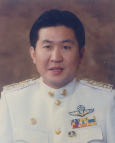 |
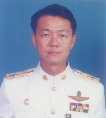
Pattaya’s Mayor Pairat
Suthithamrongsawat (left) and former Mayor Anuphong Udomratanakulchai (right) will likely
be the front running candidates for mayor when the political status of Pattaya City
changes. |
 |
But Pattaya is considered a
‘special’ city, and the people have been calling for similar treatment as other
local areas for many years. This did not happen until the new constitution was put into
effect. All the members of the Pattaya City Council will be elected by the people. The
mayor will be elected by the people. This is very gratifying to the residents of Pattaya
who have been dissatisfied with the form of government for a long time. The people believe
this is the reason for Pattaya’s failure to become a successful city since its
founding 20 years ago.
The type of government desired by the people of Pattaya would be similar
to that of Bangkok with the mayor elected independently from the city council, as well as
a fully elected city council. The populace now feels that Pattaya is a ‘drone’
city controlled by outside forces.
Now that the political arena is open, many with political leanings are
slavering to ‘serve the people’.
These people are ever ready to serve the city which is in the top 10
tourist destinations in the country and one of the potential world ‘top 10’ in
the future.
There are three individuals who have shown a strong desire to enter the
political arena; Pairat Suthithamrongsawat, present mayor of Pattaya, Anuphong
Udomratanakulachai, former mayor of Pattaya and Suchai Ruayrin, also a former mayor of
Pattaya.
Pairat Suthithamrongsawat cites the public improvements done under his
administration as his recommendation. He is especially proud of the 1,800 million baht
waste water treatment plant and his consciousness raising campaign concerning the
environment. Pairat and his team speak of continuing these projects and making the
city’s utilities a model for the rest of the country. His platform includes public
works galore. Improving Beach Road, building majestic city gates, direction signs, street
lights and a host of other improvements.
This year, Pattaya has a development budget of 4,936,000 baht from the
city and 59,120,000 baht from the central government. This does not include the budget
from last year.
Nobody knows how the city will really change, but as change will come,
politicians are campaigning with a vengeance.
Anuphong Udomratanakulachai, mayor of Pattaya in 1994-6, is now resting
from his grueling term as mayor of the city. He said he will wait and see what the
city’s new administrative system is like before making any firm decisions whether to
enter the political arena. When asked if he would enter the fray if pleased with the
system, Mr. Anuphong said he was ready at any time. He cited his experience,
qualifications and monetary readiness to campaign. He is not in debt and has no personal
problems that could be a disadvantage to his campaign or the city. He is enjoying
conducting his own business at the moment. Mr. Anuphong said his view of Pattaya was an
international one. When asked about conflicts with his personal business he said he felt
that he could run his businesses and at the same time sacrifice the rest of his free time
for the good of the city. He is now waiting to see exactly what the new administering
policy will be.
He believes, as 80-90% of Pattaya’s income comes from tourism, the
city should open a ‘window on the world’. He said that the tourism industry
should be supported by the city in all ways possible. This should not be left to the
Tourism Authority of Thailand or the private sector.
Mr. Anuphong said he felt that there was an "every man for
himself" attitude concerning tourism in Pattaya and there should be more cooperation.
"After all," he said, "Tourism is the heart of Pattaya."
He said that the city would improve by step. First, the foul waste water
would disappear and become so clean one could bathe a baby in it.
Then the utilities would become ‘world-standard’ and offer
service unknown in other parts of the country. Crime would vanish and everyone’s
lives and property would be safe. This is especially because business people like having
their money and valuables safe. One would see the foreign Mafia in Pattaya evaporate.
Mr. Anuphong also feels that media coverage by the government, the local
media and in the foreign media is very important. This is because the media has a very
important role in getting news out to the people. He said that news about Pattaya would
spread throughout the entire world. Tourists would hear about the ‘new’ Pattaya
regularly. They would know about the city’s varied and iridescent tapestry of
activities and possibilities second to no other city of its kind in the world. He also
said the visit by the FCCT on August 7-9 would be a wonderful opportunity to promote
Pattaya on a worldwide level. They would hear about how the city is solving her problems.
The last in our trinity of public servants is Suchai Ruayrin, mayor of
Pattaya from 1990-94. Mr. Suchai left politics for one administration before coming back
and taking a seat on the city council. Mr. Suchai said that he felt Pattaya should be
administered by Pattaya natives. He did not want any ‘carpetbaggers’ coming in
and pushing the ‘people of the soil’ out of their rightful place.
Mr. Suchai said that whatever form the new government takes, his desire is
to serve the people as mayor. Feeling ultimately qualified for this job, he cites his many
successes when formerly at the helm of the city. He did add that whether he was elected
was, of course, the will of the people. When asked if he felt the present administration
was in line with the desires of the populace, Mr. Suchai gave a rather circuitous answer.
"Well, it is as the media and people see it now." He said he would rather not
comment on this subject. He did say that the appointed members of the city council did
good work. He felt the next election would be more ‘fun’ than any in the past
and couldn’t wait to see it.
Comparing these three potential candidates, Pairat Suthithamrongsawat, the
present mayor, believes he has the faith of the people even though his popularity did
suffer during the economic crash. The crash resulted in the budget not stretching far
enough to accomplish all that he wished. But his encouraging people to deal with the
situation in the old Thai fashion of "Help each other solve the problem," the
mayor received many points.
As for Anuphong Udomratanakulchai and Suchai Ruayrin, their credibility is
a bit poor. Seldom seen doing any ‘public’ work, the people wonder about their
true commitment level to the city’s welfare and development. Mr. Anuphong spends
almost all of his time doing business and has helped the community very little. He is
mostly seen as an ‘honored guest’ at parties. He also makes it known that he
does not wish to talk with the media unless he feels it is necessary.
But if Mr. Anuphong should decide to enter the political arena, everyone
will be on guard. It is well known that Mr. Anuphong is extremely wealthy, and mounting a
spectacular and sparkly ‘Las Vegas’ style campaign will not strain his
resources.
One of these three men will probably become mayor of Pattaya. It is
therefore the public’s duty to watch and consider each person’s strengths,
weaknesses and commitment to the city. This will be under the new constitution and once
elected, we will have one of these three men in office for 2 years.
That is unless a brave fourth party should decide to enter the race.
Birth and Investiture
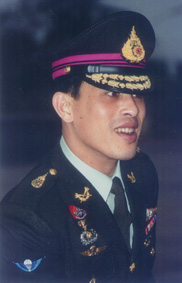
His Royal Highness Prince Vajiralongkorn was born on the 28th of
July B.E. 2495 (1952) in the Ambara Villa of Dusit Palace in Bangkok, Thailand, being the
second of four children and the only son of Their Majesties King Bhumibol Adulyadej (Rama
IX) and Queen Sirikt of Thailand.
His Majesty the King commanded on the 28th December B.E. 2515 (1972) that
His Royal Highness be invested in full ceremonies with the title of Crown Prince Maha
Vajiralongkorn of Thailand.
 Education
1956 - 1966: Primary Education at Nursery School, Udon Hall of Dusit Palace
and Chitralada School, Bangkok, Thailand.
Jan. - Sept. 1966: King’s Mead Preparatory
School, Seaford, Sussex, England.
Sept. 1966 - July 1970: Millfield School, Somerset, England.
Aug. 1970 - May 1971: King’s School, Paramatta, Sydney, Australia.
Jan. 1972 - Dec. 1976: Bachelor of Arts (Military Study) University of New South Wales,
Faculty of Military Study.
Oct. 1977 - Sept. 1978: Royal Thai Army Command and General Staff College, 5th Class.
July 1984 - Oct. 1987: Degree of Bachelor of Laws, Sukhothai Thammatirat University,
Bangkok, Thailand.
Jan. - Dec. 1990: Successfully attended the Royal College of Defense Studies, United
Kingdom of Great Britain and Northern Ireland.
Military Services
- 9 December 1975, Staff Officer, Directorate of Army
Intelligence
- 6 October 1978, Executive Officer, King’s Own Bodyguard Battalion,
1st Infantry Regiment, King’s Own Bodyguard
- 28 November 1980, Commander, King’s Own Bodyguard Battalion, 1st Infantry Regiment,
King’s Own Bodyguard
- 13 February 1984, Commanding Officer, King’s Own Bodyguard Regiment
- 30 July 1988, Commanding General, King’s Own Bodyguard Command
- 9 January 1992, Commanding General, Royalty Security Command, Office of the Supreme
Commander
- 4 May 1994, Instructor Pilot, of F-5 E/F
 His Royal Highness
Crown Prince Maha Vajiralongkorn and Her Royal Highness Princess Bajrakityabha and Her
Serence Highness Princess Siriwanwaree Mahidol graciously attended the 13th anniversary of
Ayuthaya Province’s Bangsai Vocational Center.
His Royal Highness
Crown Prince Maha Vajiralongkorn and Her Royal Highness Princess Bajrakityabha and Her
Serence Highness Princess Siriwanwaree Mahidol graciously attended the 13th anniversary of
Ayuthaya Province’s Bangsai Vocational Center.
Ranks in the Armed Services
- General of the Royal Thai Army
- Admiral of the Royal Thai Navy
- Air Chief Marshall of the Royal Thai Air Force
Military Training
Jan. - Oct. 1976
Royal Thai Army:
- Army Scholarship for further military training and studies in Australia.
- Officer attached to the Special Air Service Regiment, Perth, Western Australia.
Courses and training:
- Special Force Weapons, Special Force Demolition and unconventional warfare tactics
courses.
- Advance Navigation Training.
- Advance Patrol and Navigation Course.
- Basic Parachutist Course.
Dec. 1979 - Jan. 1980
- Rotary Wing Course UH-1H
Total Flying Time: 59.36 hours
- Bell AH - 1S Cobra
Total Flying Time: 1 hour
Feb. - May, 1980
- Military training at the United States Army Institute for military assistance, Fort
Bragg, North Carolina, USA, in the following courses:
- small arms and mortar training
- special operations training
- counter-insurgency operations
- guerrilla warfare
- survival training
- parachutist course (land and sea jumps)
June - July, 1980
- Bell UH-1H and Bell UH-1N
Total Flying Time: 249.56 hours
Sept. - Oct. 1980
- Attended the Helicopter Gunship Flying Course (Bell UH-1H), Royal Thai Army
Total Flying Time: 54.50 hours
Dec. 1980 - Feb. 1981
- Fixed - Wing Siai - Marchetti SF 260 MT
Total Flying Time: 172.20 hours
March - July, 1981
- Cessna T-37
Total Flying Time: 240 hours
Oct. - Dec. 1981
- Military and Police observation tours in Great Britain, Belgium, the Federal
Republic of Germany, the Netherlands, the Republic of France and Australia.
Oct. 1982 - Sept. 1983
- Attended and successfully completed the USAF International Military Conversion
Course F-5 (Special) Class 83 ATW and USAF Advance Fighter Course Class 83 AVW at Williams
Air Force Base, Arizona, USA.
Total Flying Time: over 2,000 hours
Combat Actions
His Royal Highness was intermittently engaged in combat actions
for counter-insurgency purposes in the North and North-East of the country as well as for
protective purposes in the area around the Cambodian refugees’ camp at Khoa Lant,
Trat Province.
Royal Activities
His Royal Highness has been designated since his early years to
represent Their Majesties the King and Queen in various Royal functions both inside
Thailand and in foreign countries. In latter years, His Royal Highness has taken on more
and more of these actions both on behalf of Their Majesties and on his own behalf. Within
the country, His Royal Highness would continuously attend formal ceremonies of all kinds
as well as preside over important Conferences and dispense advice to groups of people on
legal and other vital matters. In the foreign field, His Royal Highness has represented
Their Majesties on several occasions every year to pay Official Visits to friendly
countries throughout every continent and has continuously received important foreign
dignitaries in audiences during their visits to Thailand.
His Royal Highness has been actively assisted in these Royal activities by
his two daughters, Her Royal Highness Princess Bajrakitiyabha and Her Serene Highness
Princess Siriwanwaree Mahidol, who are presently residing with His Royal Highness in
Nonthaburi Palace.
by Dr. Iain Corness
Autotrivia Quiz
I’ll have to get my mate John Weinthal to send up some harder questions
than the one from last week - What is the Lexus LS 400 called in Japan? A number of you
got it right - the Toyota Celsior.
Now why Toyota Motor Corporation would spend zillions to push
"Lexus" as a separate brand name in other parts of the world and leave it as a
"Toyota" at home is beyond me. Mind you, there’s lots of things about the
motoring industry that’s beyond me!
Talking about names, there was a great one which came out of Brazil in the
late 70’s and it was called a "Gurgel". No kid! Turkey had a thing called
the "Anadol" (analgesic with the P taken out of it!). Then, of course, there was
the best out of China - the "Hongki" (Tonk women, no doubt!), a V8 limo to rival
the big two out of Russia, the Zil and the Zaz (which I’m sure I’ve seen on the
supermarket shelves in the washing powder aisles!) There’s certainly been some great
names around.
One of the Great Names in the history of Ford was the GT 40. This was a
race car built to win the Le Mans 24 Hour Race (which it did eventually) and was a design
masterminded by Eric Broadley (of Lola fame). It was rear engined, with a V8 (is there
anything else?) churning out 385 BHP. For its day (1966) it was an incredibly good looking
car and was a tribute to Broadley and the engineers from Dearborn. It was actually built
as part of Henry Ford II’s "Total Performance" project where he had decided
to attack the motor racing scene from Indy to Le Mans. Great P.R. stuff. I love a car
company with cojones!
So to this week’s question - why did Ford call the Le Mans racer the
GT 40? A free beer for the first correct reply. Fax or email the editorial office!
Tom’s Vibro-Fizz Machine!
Last week we took a look at Tom Raldorf’s championship
winning GoKart. Tom runs it in the 160 kg Class (the all-up weight of Kart and driver has
to be no less than 160 kg). Nice and simple.
Tom invited me out to the KR Kart Track on Thepprasit Road, where his NKT
Tornado Kart is garaged, to have a fang in his pride and joy. Now Karts are very personal
things (like underpants) and are set up to fit the owner (like underpants!). At the
beginning of this year, Tom was 103 kg, and like all good GoKarts, the seat was made to
fit him.
Here was our first little glitch. With myself at 78 kg wringing wet the
seat was just a tad too large. Glitch number 2 - I was not going to bring my expensive,
white, triple layer Nomex Race suit out to a Kart track to get covered in oil, was I? I
was going to wear Tom’s. Putting it on, I stood there with the crutch around my knees
and several yards of superfluous material hanging off my shoulders. This was not a
"good look"!
Grabbing all my excess clobber I threw myself into the seat and sort of
stuffed the extra yards of suit in beside me as much as possible. The rest of me was
covered in the regulation outfit - helmet, vizor, gloves and race boots.
The latter bit of gear is worth a mention. Race boots are very thin soled,
narrow last footwear so that your feet take up as little room as possible and you are able
to feel the pedals beneath the sole of your foot. Mine, being made for car racing, are
also made of fire-proof material.
The controls in this type of GoKart are simple - a steering wheel, a brake
pedal on the left and the go pedal on the right. No clutch, no gears, no lights, no
indicators!
With a push start you’re off and clatter - clatter - banging down the
track, the GoKart jumping up and down till the engine gets up and running. Suddenly, the
engine begins to rev out (the GoKart chaps call it "coming on the pipe") and you
are away.
The acceleration from only 100 cc is phenomenal. Stab the right foot down
and your neck snaps back and the Kart twitches as it bites into the bitumen. On a tight
little track like KR the next corner is suddenly in your lap while you are still trying to
exit smoothly from the last one!
With no suspension travel you feel every little ripple on the track
surface and you find yourself looking for the smooth bits to stop your teeth clanging
together!
After a couple of "sighter" laps to get used to track and
machine I began to have a bit of a try. It was more like a bit of a trial! All my years of
"smooth" race car driving were to no avail. That GoKart bounced, twitched, spat,
leaped, and did everything in its power to fling me into the shrubbery. As the laps got
quicker the frantic corrections became even more heroic. After about ten laps I told the
NKT Tornado it was definitely the winner and I came in defeated!
Tom, of course, was all smiles (he’d got his Kart back in one bit) but told me that
smooth "big car" techniques didn’t work with Karts. (That much I had worked
out for myself, Tom!) He then showed me the form that makes him the championship leader.
To hell with smoothness, Tom grabbed that NKT by the scruff, shook it severely and forced
it to do his bidding, sliding the Kart into the corner and waggling his backside to pull
it straight again. It was a great display of man over machine.
Mind you, if I were only 40 years younger I reckon I’d give that Tom
Raldorf a run for his money. Anyone got a spare Kart and some elixir of youth potion? (Old
racers never die!)
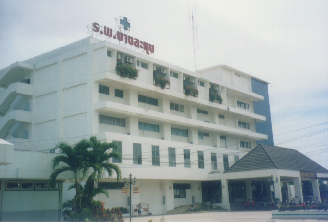 Banglamung Hospital - leading the way.